
1:1 Consultation
Non-Surgical Thread Lifting in Korea: A Patient Guide
A complete guide to non-surgical thread lifting in Korea: how it works, who is a candidate, recovery, results, and its real limits versus a full facelift.
Aube Clinic · Dr. Suhyun Kim, M.D. · Yongsan-gu, Seoul
1:1 Consultation →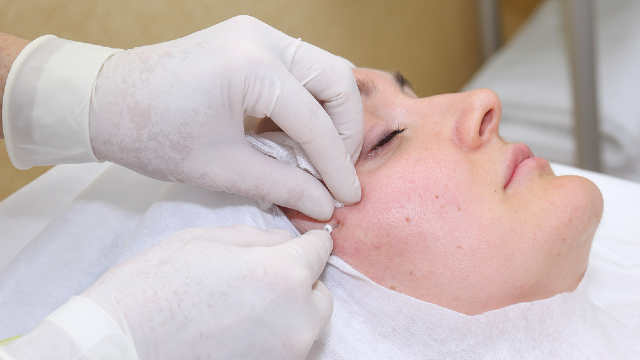
Non-Surgical Thread Lifting in Korea: A Complete Patient Guide
Medically reviewed by Dr. SuHyun Kim, Medical Director, Aube Clinic
Non-surgical thread lifting has become one of the most searched-for facial treatments among people considering a trip to Seoul. It sits in an interesting middle ground: more structural than an injectable, but far less invasive than surgery. If you are researching thread lifting in Korea, it helps to understand exactly what the procedure can achieve, what it cannot, and how to judge whether you are a suitable candidate before you book anything.
This guide explains how facial thread lifting works, the main types of threads used, realistic timelines for results, recovery expectations, and the honest limits of the treatment compared with a surgical facelift. It is written to help you ask better questions during a consultation, not to replace that consultation. Every face is different, and only an in-person assessment can tell you whether thread lifting is likely to help with your specific concerns.
What Is a Thread Lift?
A thread lift is a minimally invasive procedure in which fine, absorbable surgical threads are placed under the skin using a thin needle or cannula. Once positioned, the threads gently reposition lax tissue and hold it in a slightly lifted position. Instead of removing skin, as a surgeon would in a facelift, the physician suspends and supports existing tissue. According to the American Society of Plastic Surgeons, this produces a subtle but visible lift while avoiding the incisions, scarring, and extended downtime associated with surgery.
The threads used today are made from materials that the body gradually absorbs over a period of months. As they dissolve, they leave behind more than just a temporary lift. The presence of the thread material and the small controlled trauma of insertion prompt the skin to build new collagen along the treated path. This combination of an immediate mechanical effect and a slower biological effect is what makes thread lifting distinctive among non-surgical options.
Thread lifting is commonly used to soften early to moderate sagging along the cheeks, jawline, and neck, and to refine areas such as the brow, nasolabial folds, and jowls. It is a treatment for laxity and contour, not a treatment for skin texture, pigmentation, or deep static wrinkles, which are usually better addressed by other methods.
How Thread Lifting Works: Mechanical Lift and Collagen Stimulation
Thread lifting works through two mechanisms that operate on different timelines. Understanding both is the key to having realistic expectations.
The mechanical lift
Many threads have tiny barbs, cones, or molded projections along their length. When the thread is drawn through the tissue, these projections grip the underlying soft tissue and allow the physician to reposition it upward or backward. This is the part of the treatment you may notice immediately: a modest repositioning of the cheek or jawline that is visible right after the appointment. Because the effect is mechanical, it depends heavily on how the threads are placed, the vectors chosen, and the amount and quality of tissue being lifted. This immediate lift is real, but it is generally subtle rather than dramatic.
Collagen stimulation (biostimulation)
The second mechanism unfolds over weeks and months. The thread material acts as a scaffold and provokes a mild, controlled inflammatory response. Published research shows that biostimulatory materials such as poly-L-lactic acid and polydioxanone activate fibroblasts, the cells responsible for producing collagen, and increase the synthesis of type I and type III collagen in the treated area. As new collagen forms along the thread path, the skin can feel firmer and better supported even after the thread itself has dissolved. This is why the final impression of a thread lift is not visible on day one; it develops as the skin remodels.
Because collagen production varies with age, genetics, sun exposure, and overall skin health, the degree of firming differs from person to person. No physician can promise a specific amount of tightening, and results are best described as modest and gradual rather than guaranteed.
Types of Threads: PDO vs PLLA (and PLGA)
Different clinics use different thread materials, and the material influences how long the thread stays in the skin and how it behaves. The most common categories are PDO, PLLA, and PLGA. All are absorbable and have a long history of use in surgical suturing.
PDO threads
PDO stands for polydioxanone, a material used in dissolvable surgical sutures for decades. PDO threads are typically absorbed by the body within roughly six to eight months, although the collagen they stimulate can last somewhat longer. PDO threads come in several forms, including smooth mono threads used mainly for skin quality, twisted threads for volume, and barbed or cog threads used for lifting. They are often chosen when a physician wants a versatile, well-tolerated option and are frequently used across the cheeks, jawline, and neck.
PLLA and PLGA threads
PLLA stands for poly-L-lactic acid, and PLGA is a copolymer of lactic and glycolic acid. These materials generally take longer to absorb than PDO and are particularly associated with collagen stimulation. Poly-L-lactic acid is well documented in aesthetic medicine as a collagen biostimulator, meaning that a meaningful part of its effect comes from the new collagen it encourages rather than from the material itself. Some patients and physicians favor PLLA or PLGA threads when the goal leans toward longer-lasting biostimulation, though "longer" here still means months, not permanence.
When people compare "PDO vs PLLA threads," there is no universally superior choice. The right material depends on your anatomy, the area being treated, your goals, and the physician's assessment. A thoughtful consultation should explain why a particular thread type is being recommended for you rather than presenting one material as best for everyone.
What a Thread Lift Can and Cannot Do
Being clear-eyed about outcomes is the single most important part of deciding whether thread lifting is right for you.
A thread lift can provide a subtle lift to mild or moderately lax tissue, add some definition to the jawline or cheek, and encourage gradual collagen-related firming. For the right candidate, it offers a meaningful refresh with minimal downtime and no incisions. Many people appreciate that the results look natural precisely because they are understated.
A thread lift cannot remove significant excess skin, dramatically reshape the deeper facial structures, or reverse advanced sagging. It does not replace lost facial volume the way a filler might, and it does not resurface the skin or treat sun damage. If your concern is heavy jowling, substantial skin redundancy, or pronounced descent of the mid-face, the honest answer is that threads are unlikely to satisfy you, and a consultation should tell you so.
Thread Lifting Is Not a Facelift
This point deserves its own section because it is the most common source of disappointment. A surgical facelift, performed by a plastic surgeon, involves incisions, the release and repositioning of deeper tissue layers, and the removal of excess skin. It produces a more pronounced and longer-lasting change, but it also involves anesthesia, a recovery period measured in weeks, scarring, and surgical risk.
Thread lifting is a different category of treatment. It is temporary, it works with your existing tissue rather than removing any, and its effect is comparatively subtle. Describing a thread lift as a "non-surgical facelift" sets expectations that the procedure cannot meet. A more accurate way to think about it is as a way to soften early sagging and support the skin, not as a substitute for surgery. If you are weighing the two, an honest consultation should help you understand which category of treatment actually matches your goals.
Who Is a Good Candidate?
Thread lifting tends to work best for people in their thirties to fifties who have mild to moderate laxity but still retain reasonably good skin quality and elasticity. Good candidates usually have early jowling, a softening jawline, or mild sagging of the cheeks rather than severe, long-standing skin excess. People who want a low-downtime option and who understand that the result will be natural and temporary are often the most satisfied.
Candidacy is always an individual judgment. Factors such as skin thickness, the amount and position of facial fat, bone structure, and previous treatments all influence whether threads are likely to help. This is why a proper assessment matters more than any general rule. You can read more about the clinic's approach to consultations on the Aube Clinic about page.
Who Should Reconsider or Wait
Thread lifting is not appropriate for everyone. People with active skin infection or inflammation in the treatment area, certain bleeding disorders, or a known allergy to the thread material should not proceed. Those who are pregnant or breastfeeding are typically advised to wait. If you have very thin skin, very advanced sagging, or significant excess skin, threads may produce little visible benefit and could leave you frustrated.
Anyone taking blood-thinning medication or supplements should disclose this in advance, as it can affect bruising and bleeding. During your consultation, be honest about your medical history, medications, and previous aesthetic procedures. A responsible physician may recommend against thread lifting, or suggest a different treatment, if it is not likely to serve you well.
What to Expect: Consultation, Procedure, and Recovery
The consultation
A thread lift should always begin with a face-to-face assessment. The physician evaluates your skin, discusses your goals, and explains what is realistically achievable. This is the moment to ask how many threads are proposed, which material and vectors are being used, what results you can expect, and what the recovery will involve. If any part of the plan is unclear, ask for it to be explained again.
During the procedure
On the day of treatment, the area is cleaned and a local anesthetic is applied to keep you comfortable. The physician then inserts the threads through small entry points using a fine needle or cannula, positions them along the planned vectors, and adjusts the tissue to create the lift. The procedure itself is usually completed within an hour, though this varies with the number of threads and the areas treated. You may feel pulling or pressure, but sharp pain should be controlled by the anesthetic.
Recovery and downtime
One of the main appeals of thread lifting is the limited downtime. Most people can return to everyday activities quickly, though some swelling, bruising, tenderness, and a feeling of tightness are normal in the first days to weeks. You may be advised to sleep on your back, avoid vigorous facial movements and strenuous exercise for a short period, and skip dental work or aggressive facial treatments while the threads settle. Following the aftercare instructions closely helps reduce the risk of the threads shifting before the tissue has stabilized.
How Long Do Results Last?
Thread lift results are temporary, and this is by design. The immediate mechanical lift is supported by the threads while they remain intact, and the collagen-related firming continues for a period after the material has been absorbed. Published patient information from the American Society of Plastic Surgeons notes that thread lift results are generally temporary and can last up to around 18 months, with individual outcomes varying widely.
How long your particular result lasts depends on the thread material, your skin quality, your age, your lifestyle, and how your tissue responds. Sun exposure, smoking, and the natural progression of aging all shorten the visible benefit. Because results fade, some people choose to repeat the treatment periodically, while others use it as a one-time refresh. There is no honest way to guarantee a fixed duration, so be cautious of any promise that a thread lift will last a specific number of years.
Risks and Possible Side Effects
Thread lifting is considered a relatively low-risk procedure when performed by an experienced physician, but it is not risk-free. Common and usually temporary effects include swelling, bruising, tenderness, mild asymmetry, dimpling or puckering at insertion points, and a sensation of tightness. These typically resolve as the tissue settles.
Less common complications can include visible or palpable threads, thread migration, infection, prolonged asymmetry, or an unsatisfactory cosmetic result that may require correction. Choosing a physician who performs the treatment personally, understands facial anatomy, and follows careful technique and aftercare is the most important way to reduce these risks. If you experience worsening pain, spreading redness, fever, or signs of infection after a thread lift, seek medical care promptly rather than waiting.
Getting a Thread Lift in Seoul: Practical Notes for International Patients
Seoul is a major destination for non-surgical facial treatments, and many international patients travel specifically for thread lifting. If you are considering this, plan your trip around the consultation as well as the procedure. A remote pre-consultation, where offered, can help clarify whether you are likely to be a candidate before you commit to travel, but the final decision should rest on an in-person assessment.
Allow time for swelling and bruising to settle before any events or a long flight home, and ask the clinic directly about aftercare, follow-up, and how complications would be handled. Prices, payment methods, and scheduling vary and should be confirmed directly with the clinic rather than assumed. If travel is part of your plan, check current entry requirements and health guidance through official sources such as the U.S. Centers for Disease Control and Prevention before departure. You can reach out through the Aube Clinic contact page to ask about consultations and what to expect.
The Bottom Line
- Thread lifting is a minimally invasive, temporary treatment that combines an immediate mechanical lift with gradual collagen stimulation; it is not a facelift and should not be described as one.
- The best candidates have mild to moderate laxity with reasonably good skin quality; people with heavy sagging or significant excess skin are usually better served by other options.
- Results are modest and typically last up to around 18 months, varying with thread material, skin quality, age, and lifestyle, so no fixed duration can be guaranteed.
- Common side effects such as swelling and bruising are usually temporary, but choosing an experienced physician and following aftercare closely is essential to reduce risks.
- A thorough, honest consultation is the only reliable way to know whether thread lifting suits your specific concerns.
Frequently Asked Questions
How does thread lifting work?
Thread lifting works in two ways at once. Fine absorbable threads with barbs, cones, or molded projections physically reposition lax tissue for an immediate, subtle lift. Over the following weeks and months, the thread material stimulates fibroblasts to produce new collagen along the treated path, which can add gradual firmness even after the thread dissolves.
Is a thread lift the same as a facelift?
No. A facelift is a surgical procedure that involves incisions, repositioning of deeper tissue, and removal of excess skin, producing a stronger and longer-lasting change. A thread lift is non-surgical and temporary, works with your existing tissue, and delivers a much more subtle result. The two are different categories of treatment and should not be equated.
What is the difference between PDO and PLLA threads?
PDO threads are made from polydioxanone and are usually absorbed within roughly six to eight months. PLLA threads are made from poly-L-lactic acid, generally absorb more slowly, and are especially associated with collagen stimulation. Neither is universally better; the right choice depends on your anatomy, the area treated, and your physician's assessment.
How long is the recovery after a thread lift?
Most people return to everyday activities quickly, which is one of the main attractions of the treatment. Swelling, bruising, tenderness, and a feeling of tightness are common in the first days to weeks. You may be advised to avoid strenuous exercise, vigorous facial movements, and dental work for a short period while the threads settle.
How long do thread lift results last?
Results are temporary and commonly last up to around 18 months, though this varies considerably from person to person. Thread material, skin quality, age, sun exposure, and lifestyle all influence how long the visible benefit remains. Because results fade, some people repeat the treatment, while others treat it as a one-time refresh.
Does a thread lift hurt?
The procedure is usually performed under local anesthesia, so sharp pain should be well controlled. You may feel pulling, pressure, or a tugging sensation during placement, and some tenderness afterward is normal. Discomfort during recovery is generally mild and temporary.
Am I a good candidate for a thread lift?
Good candidates typically have mild to moderate laxity with reasonably good skin elasticity, rather than heavy sagging or significant excess skin. Candidacy also depends on skin thickness, facial structure, medical history, and your goals. Only an in-person consultation can tell you whether thread lifting is likely to help in your specific case.
This article is for general educational purposes only and describes non-surgical aesthetic medicine, in which results vary from person to person. It is not medical advice and not a self-diagnosis tool. Only an in-person consultation with a qualified physician can determine whether any treatment is appropriate for you.
Clinical Safety Notice & Personalized 1:1 Consultation
All aesthetic and regenerative procedures at Aube Clinic (Hoban Summit Edition 2F, 66 Hangang-daero, Yongsan-gu, Seoul) are planned and performed 1:1 by Representative Director Dr. Suhyun Kim after direct facial anatomy and skin evaluation. Treatment outcomes and recovery timelines vary by individual tissue condition, and temporary swelling, bruising, redness, tenderness, or asymmetry may occur.
1:1 Consultation