
1:1 Consultation
How Thread Lifting Works for Skin Tightening
Learn how thread lifting tightens sagging skin, boosts collagen, and creates a natural-looking lift with minimal downtime. Discover the benefits today.
Aube Clinic · Dr. Suhyun Kim, M.D. · Yongsan-gu, Seoul
1:1 Consultation →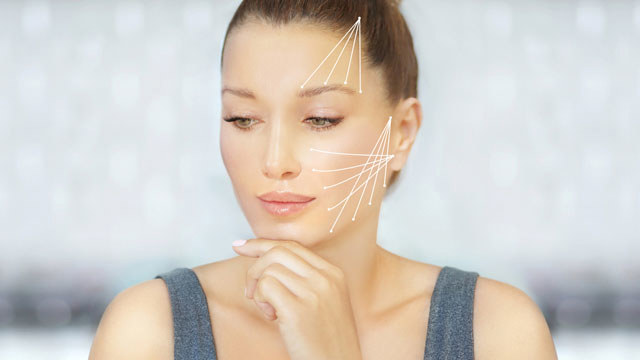
Understanding Skin Laxity and Facial Aging
As skin ages, it gradually loses collagen, elastin, and structural support, resulting in sagging cheeks, a less defined jawline, and deepening nasolabial folds. This process, known as skin laxity, is a natural part of aging but is often accelerated by sun exposure, genetics, repeated facial movement, and lifestyle factors such as smoking or significant weight fluctuation. Collagen production begins to decline gradually from the mid-to-late twenties, and by the time visible sagging appears, the underlying support structure of the skin has often already weakened considerably.
Facial aging does not occur uniformly. It typically involves a combination of volume loss in the mid-face, weakening of the retaining ligaments that hold facial tissue in place, and a gradual downward shift of soft tissue under the influence of gravity. This is why sagging often appears first along the jawline, cheeks, and neck — areas where structural support diminishes earliest.
While surgical facelifts have traditionally been the go-to solution for restoring firmness, many patients today are seeking less invasive alternatives that require minimal downtime while still delivering visible, natural-looking improvement. Thread lifting has emerged as one of the most sought-after non-surgical options for addressing skin laxity, offering a way to lift and tighten sagging tissue without the extended recovery associated with surgery.
What Is Thread Lifting and How Does It Work?
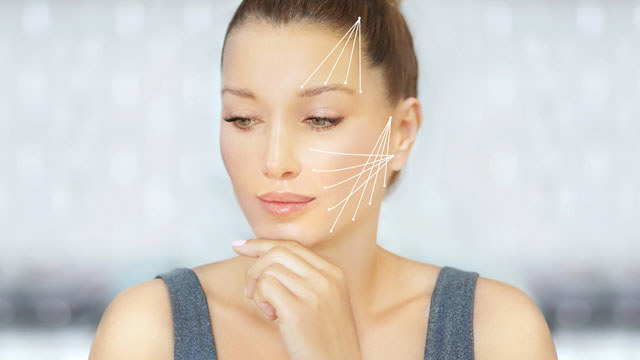
Thread lifting is a minimally invasive cosmetic procedure that uses biodegradable, medical-grade threads to mechanically lift sagging skin while stimulating the body's natural collagen production. The threads are inserted beneath the skin using fine needles or cannulas, along specific vectors designed to counteract gravitational sagging and restore a more youthful facial contour.
There are two primary mechanisms behind thread lifting's effectiveness:
Immediate Mechanical Lift
Once threads are positioned beneath the skin, they create an anchoring effect that physically repositions loose tissue, producing a visible lifting effect immediately after treatment. The degree of lift depends on thread type, insertion depth, and the vector along which tension is applied.
Long-Term Collagen Stimulation
As the threads gradually dissolve over several months, they trigger a controlled inflammatory response that encourages the body to produce new collagen and elastin around the treated area. This regenerative process continues to improve skin firmness and texture well after the threads themselves have fully absorbed, meaning the benefits of treatment often continue to build gradually rather than appearing all at once.
Types of Threads Used in Modern Lifting Techniques
Different thread types are designed for different purposes, and understanding these distinctions helps explain why treatment plans are so individualized:
Smooth (mono) threads – Primarily stimulate collagen production and improve skin texture and tone, with minimal mechanical lifting effect. Often used for fine lines and overall skin quality improvement.
Cog or barbed threads – Feature small bidirectional barbs that grip surrounding tissue, providing a stronger mechanical lifting effect. These are typically used for more pronounced sagging in the cheeks or jawline.
Screw threads – Twisted or intertwined threads used primarily to add volume and improve density in areas with thinning tissue.
Materials commonly used include polydioxanone (PDO), poly-L-lactic acid (PLLA), and polycaprolactone (PCA), each with a different absorption timeline and collagen-stimulating profile. The choice of material and thread type is tailored to the treatment area and the patient's specific concerns.
Who Is a Good Candidate for Thread Lifting?
Thread lifting is generally suitable for individuals who:
Have mild to moderate skin laxity, particularly in the cheeks, jawline, or neck
Are not yet ready for, or prefer to avoid, surgical facelift procedures
Want a treatment with minimal downtime and a quicker return to daily activities
Have realistic expectations about gradual, natural-looking results
Are in good general health with no active skin infections, autoimmune conditions, or bleeding disorders affecting the treatment area
Are non-smokers or willing to reduce smoking around the time of treatment, as smoking can affect healing and collagen response
Age is not the sole determining factor for candidacy. Some younger patients pursue thread lifting proactively to slow the visible progression of sagging, while others use it as a maintenance treatment between more significant interventions. Thread lifting is not typically recommended for patients with severe skin laxity, significant excess skin, or a heavy midface, as these cases often respond better to surgical intervention or a combination approach. A thorough in-person consultation is essential to determine whether thread lifting, a combination approach, or an alternative treatment is most appropriate for an individual's facial structure and goals.
The Thread Lifting Procedure: What to Expect
Consultation and Facial Assessment
The process begins with a detailed evaluation of facial structure, skin elasticity, volume distribution, and areas of concern. This assessment helps determine the appropriate thread type, quantity, insertion depth, and vectors for each patient. Photographs are often taken to document baseline appearance and track progress over time.
Preparation and Numbing
Prior to treatment, a topical or local anesthetic is applied to the treatment area to minimize discomfort during thread insertion. The skin is thoroughly cleansed and disinfected to reduce the risk of infection.
Thread Insertion
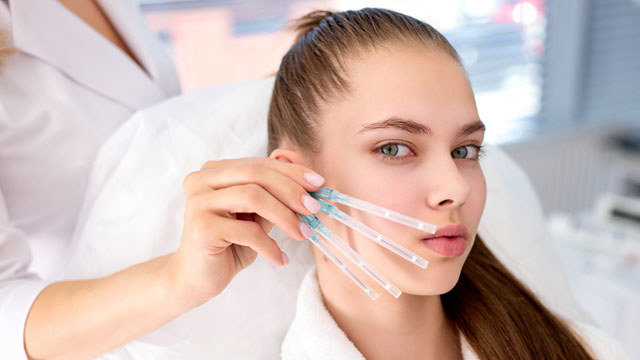
Using fine needles or cannulas, threads are carefully inserted along pre-mapped paths beneath the skin, following the natural contours of the face. The physician then gently adjusts tension along each thread to achieve the desired lift before trimming and securing the ends beneath the skin's surface.
Finishing and Aftercare Guidance
Once the desired lift is achieved, the treatment area is cleansed, and any minor entry points are checked. Patients receive specific aftercare instructions covering sleeping position, facial movement, skincare, and activity restrictions to support optimal healing and results.
The entire procedure typically takes between 30 minutes and an hour, depending on the number of areas treated and the complexity of the case. Most patients describe the sensation as mild pressure or tugging rather than significant pain, particularly with adequate numbing.
Doctor's Expertise: Precision Rooted in Experience
At Aube Clinic, thread lifting procedures are performed by Dr. SuHyun Kim, a physician with over a decade of focused clinical experience in non-surgical facial lifting and a cumulative record of more than 19,200 lifting cases. Dr. Kim holds Gold Label certification for Silhouette Soft in Korea — a distinction awarded to practitioners who demonstrate advanced proficiency with this specific thread system — and has been recognized as a Key Doctor across multiple international thread and filler brands, including Aptos, Ellansé, and Ultracel.
Dr. Kim's clinical background includes leadership roles at several respected clinics in both Korea and China, providing exposure to a broad range of facial structures, skin types, and aging patterns. This international clinical experience contributes to a more nuanced, adaptable approach to treatment planning.
Beyond clinical practice, Dr. Kim serves as President of the International Thread Lifting Research Association and Director of the Korean Society of Clinical Aesthetic Medicine, and has authored a standard clinical reference guide on thread lifting techniques used by other practitioners in the field. This combination of extensive hands-on experience and academic contribution reflects a deep, evidence-based understanding of facial anatomy, thread mechanics, and technique refinement — factors that directly influence both safety and the naturalness of results.
Why Choose Aube Clinic
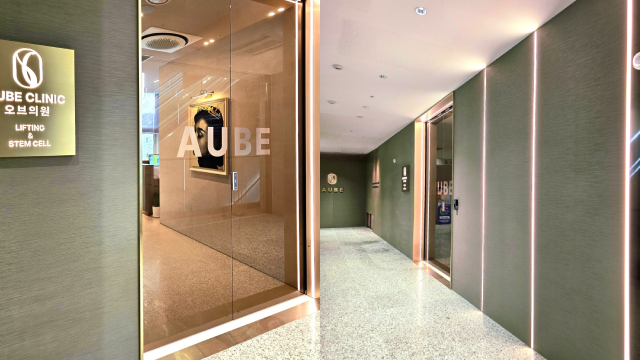
Located on the 2nd Floor, Units 203, 204, 205, Aube Clinic has built its practice around a singular focus: natural-looking, non-surgical facial rejuvenation. Several factors distinguish the clinic's approach to thread lifting:
Physician-only consultations – Every patient is assessed and treated directly by the physician, without delegation to non-medical staff, ensuring clinical decisions are made by a trained specialist at every stage.
One-patient-per-time-slot scheduling – Appointments are structured to allow focused, unhurried attention during both consultation and treatment.
Integrated treatment planning – Thread lifting is often combined with complementary technologies, such as radiofrequency or ultrasound-based skin tightening devices, when clinically appropriate, to support more comprehensive and longer-lasting results.
Structured aftercare program – Patients receive guidance on swelling reduction, moisture care, and recovery support following treatment, rather than being left to manage recovery independently.
Individualized approach – Treatment plans are built around each patient's unique facial structure, skin quality, and goals rather than a standardized, one-size-fits-all protocol.
Experience with revision cases – Patients seeking solutions following complications or unsatisfactory results from procedures performed elsewhere are also supported, drawing on a depth of case experience.
Recovery, Safety, and Realistic Outcomes
Recovery Timeline
Thread lifting is associated with a relatively short recovery period compared to surgical facelifts. Mild swelling, bruising, or a sensation of tightness or pulling in the treated area is common in the first few days and typically resolves within one to two weeks. Some patients may also notice temporary puckering of the skin near insertion points, which usually settles as swelling subsides. Most patients can resume normal daily activities within a day or two, though strenuous exercise, extensive facial massage, and wide jaw movements (such as excessive chewing or dental work) are usually discouraged for several weeks to avoid disrupting thread positioning.
Safety Considerations
As with any medical procedure, thread lifting carries some risks, including temporary asymmetry, dimpling, minor discomfort at insertion points, or, in rare cases, thread migration or palpability beneath the skin. These effects are generally mild and resolve on their own or with minor intervention. Choosing a qualified, experienced physician who understands facial anatomy in depth, and following pre- and post-procedure instructions carefully, helps minimize potential complications and supports a smoother recovery.
What Results to Expect
Thread lifting produces a gradual, natural-looking improvement rather than a dramatic, instant transformation. Initial lifting is visible soon after treatment, with continued firming as collagen production increases over the following two to three months. Results are not permanent, as the threads eventually absorb into the body over six to eighteen months, depending on the material used; most patients see benefits lasting from several months to over a year, depending on individual factors such as skin quality, age, thread type, and lifestyle. Periodic maintenance treatments can help sustain results over time for patients who wish to continue benefiting from the procedure long-term.
Final Thoughts
Thread lifting offers a meaningful option for individuals seeking to address early to moderate signs of facial sagging without undergoing surgery. When performed by an experienced physician with a thorough understanding of facial anatomy, thread behavior, and individualized treatment planning, it can provide a subtle, natural lift while supporting the skin's own collagen renewal process over time. As with any cosmetic treatment, results and suitability vary from person to person, and a personalized, in-person consultation remains the best starting point to determine whether thread lifting aligns with your specific goals, skin condition, and facial characteristics.
Clinical Safety Notice & Personalized 1:1 Consultation
All aesthetic and regenerative procedures at Aube Clinic (Hoban Summit Edition 2F, 66 Hangang-daero, Yongsan-gu, Seoul) are planned and performed 1:1 by Representative Director Dr. Suhyun Kim after direct facial anatomy and skin evaluation. Treatment outcomes and recovery timelines vary by individual tissue condition, and temporary swelling, bruising, redness, tenderness, or asymmetry may occur.
1:1 Consultation