
1:1 Consultation
Dermal Fillers in Korea: Ellansé and Megafill Explained
How Ellansé and Megafill fillers add facial volume in Korea, their collagen-stimulating and hyaluronic-acid differences, and the key safety risks to know.
Aube Clinic · Dr. Suhyun Kim, M.D. · Yongsan-gu, Seoul
1:1 Consultation →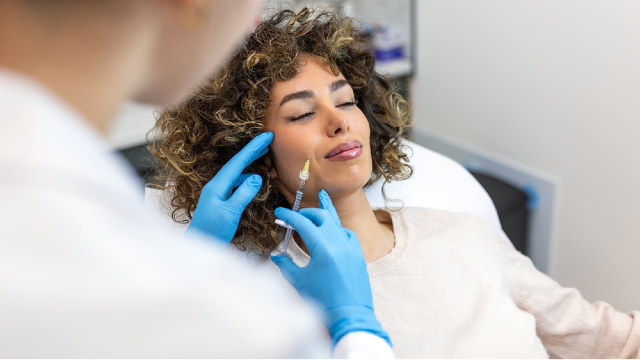
Medically reviewed by Dr. SuHyun Kim, Medical Director, Aube Clinic
Dermal fillers are among the most requested non-surgical treatments for restoring facial volume and softening the changes that come with aging. At Aube Clinic in Seoul, volumizing treatments are offered with a range of products, including Ellansé and Megafill. This guide explains what these two fillers are, how they differ from each other, what regulatory status means for a U.S. reader, and — importantly — the safety considerations that any responsible discussion of fillers must include. The aim is to give you a clear, honest foundation for a consultation, not to promote a particular product or promise a result.
Before going further, one safety point deserves top billing: the most serious risk associated with any dermal filler is accidental injection into a blood vessel, known as vascular occlusion. This is uncommon but potentially serious, and it is the main reason filler should be treated as a medical procedure performed by a trained injector with a thorough knowledge of facial anatomy — not as a casual cosmetic add-on.
Two Different Kinds of Filler
"Dermal filler" is a broad term that covers several different materials that behave differently in the body. Ellansé and Megafill sit in two distinct categories, and understanding that distinction is the key to understanding this whole topic.
Megafill: a hyaluronic-acid (HA) filler
Megafill is a hyaluronic-acid (HA) filler developed in Korea. Hyaluronic acid is a sugar-based molecule that occurs naturally in the body's connective tissue, and in filler form it is used to add volume and support to facial areas. HA fillers work largely by physically occupying space and drawing in water, which is why they can produce a relatively immediate volumizing effect. The effect of HA fillers is temporary; published information on HA fillers describes results that typically last on the order of several months to around a year before the material is gradually broken down by the body.
A defining and clinically important property of HA fillers is that they can be dissolved with an enzyme called hyaluronidase. If an HA filler needs to be reduced, corrected, or urgently reversed — including in the management of certain vascular complications — hyaluronidase can break down the hyaluronic acid. This reversibility is one of the practical safety features of the HA category.
Ellansé: a polycaprolactone (PCL) collagen stimulator
Ellansé belongs to a different category. It is a polycaprolactone (PCL) collagen-stimulating biostimulator. Instead of relying only on the injected material to hold volume, PCL fillers consist of PCL microspheres suspended in a gel carrier. The gel provides some early volume, and then, as it is absorbed over the following weeks, the PCL microspheres prompt the body to form new collagen in the area over time. This is why biostimulators are described as producing a more gradual, longer-developing effect than pure HA fillers.
There is a critical safety consequence of this difference: PCL is not hyaluronic acid, and it cannot be dissolved with hyaluronidase. The reversibility that applies to HA fillers does not apply to Ellansé. That makes precise placement by an experienced injector even more important, because a PCL result cannot simply be "undone" with an enzyme in the way an HA result often can.
Regulatory Status: What U.S. Readers Should Know
Because Aube Clinic serves international patients, regulatory context matters. Here it needs to be stated precisely and without overstatement.
- Ellansé (PCL) is used in markets that recognize CE marking and, in Korea, the Ministry of Food and Drug Safety (MFDS). It is not approved by the U.S. Food and Drug Administration (FDA).
- Megafill (HA) is a Korean-market hyaluronic-acid filler and is likewise not a U.S. FDA-approved product.
For context, the FDA has approved a number of dermal fillers in the United States across several material categories — including hyaluronic acid, calcium hydroxylapatite, poly-L-lactic acid, and polymethylmethacrylate — but approval is granted to specific products for specific uses, and neither Ellansé nor Megafill is among the U.S.-approved products. It is also worth understanding the concept of off-label use: a filler approved for one facial area or indication may be used in other areas at a clinician's discretion, and such use falls outside the specific terms of its approval. Any filler treatment can involve off-label considerations, and this is a fair topic to raise with your treating physician. If regulatory status is central to your decision, ask the clinic directly and consult official regulators such as the FDA.
The Safety Conversation: Vascular Occlusion
No honest article about dermal fillers can skip this. According to the FDA, the most serious risk of soft-tissue fillers is unintentional injection into a blood vessel. When filler enters or compresses a vessel, it can block blood flow to tissue, and the consequences can range from skin injury (necrosis) to, rarely, damage to facial structures, vision changes, or — in very rare cases — more serious events. Warning signs that warrant immediate medical attention include unusual or severe pain, changes in vision, and skin that turns white, gray, or blue near the injection site.
Several practical points follow from this:
- Anatomy matters. Certain regions, such as the area between the eyebrows, the nose, and the folds beside the nose, have complex blood supply and are considered higher-risk. This is why the injector's training and anatomical knowledge are central to safety.
- HA versus PCL changes the toolkit. For HA fillers such as Megafill, hyaluronidase provides a way to dissolve the material, and early high-dose hyaluronidase is part of how vascular complications from HA fillers are managed. For PCL fillers such as Ellansé, this enzymatic reversal is not available, which raises the importance of careful, conservative technique.
- Common side effects are usually milder and temporary. Swelling, bruising, redness, and tenderness at the injection site are common and typically resolve within days to a couple of weeks. Less common issues include lumps or nodules and, rarely, delayed inflammatory reactions.
At Aube Clinic, injectable treatments are performed by Dr. Kim, the clinic's Medical Director, in a one-on-one setting. A thorough pre-treatment discussion of your medical history, medications, and any prior filler is part of responsible planning. You can learn more about the clinic's single-physician model on the Aube Clinic about-us page.
Filler Versus Thread Lift: Different Jobs
People often ask whether a filler or a thread lift is "better." They generally address different problems. Fillers are primarily about volume — restoring or adding fullness where tissue has thinned or descended — while thread lifting is a mechanical approach aimed at repositioning or supporting tissue. In some plans the two are complementary rather than competing, and a person concerned with both volume loss and mild laxity may be advised on a combination. Neither is a facelift, and neither is surgery. The right choice, or combination, depends on your specific anatomy and goals, which is why an individual assessment matters more than a generic recommendation.
What to Expect and What Not to Expect
Realistic expectations are part of good care. HA fillers such as Megafill tend to show a fairly immediate volumizing effect that is temporary and gradually fades. PCL biostimulators such as Ellansé tend to build more gradually as collagen forms, with an effect that develops over weeks. In both cases, results vary from person to person and cannot be guaranteed, and the aim of a good treatment is usually a natural, balanced improvement rather than a dramatic transformation.
Longevity depends on the product, the area treated, the amount used, and individual factors such as metabolism and lifestyle, so it is not possible to promise an exact duration. Maintenance treatments are common because filler effects are not permanent. This article does not discuss pricing; costs, product selection, and treatment planning are specific to each person and should be confirmed directly with the clinic. To ask about a consultation, use the Aube Clinic contact-us page.
Preparing for a Filler Consultation
A productive consultation is where safe, realistic filler planning begins, and there are several things worth preparing in advance. Bring an accurate account of your medical history, including any bleeding tendencies, autoimmune conditions, or history of cold sores, and a full list of medications and supplements — some, such as blood thinners, can increase bruising. If you have had filler before, note what product was used, where, and when, because prior material can influence how a new treatment is planned; this is especially relevant when a non-reversible biostimulator such as Ellansé is being considered alongside areas that may already contain HA filler.
It also helps to think through your goals honestly before you arrive. Fillers can restore volume and soften certain contours, but they cannot achieve everything, and a good clinician will tell you when a goal is better served by a different treatment or by no treatment at all. Ask about which product is proposed and why, what the expected timeline and longevity are, how side effects and any complications would be managed, and what the plan is if you are unhappy with the result. Because Aube Clinic uses a single-physician, one-on-one model, the same doctor who assesses you also carries out and follows up on the treatment, which supports continuity in this kind of planning.
The Bottom Line
- Megafill is a Korean hyaluronic-acid (HA) filler and Ellansé is a polycaprolactone (PCL) collagen-stimulating biostimulator — two different materials that behave and last differently.
- Neither Ellansé nor Megafill is approved by the U.S. FDA. Ellansé is used under CE/MFDS frameworks; Megafill is a Korean-market product. Filler use can also involve off-label considerations worth discussing with your clinician.
- The most serious filler risk is vascular occlusion — accidental injection into a blood vessel — which makes a trained injector and knowledge of facial anatomy essential.
- HA fillers can be dissolved with hyaluronidase, but PCL fillers cannot, so precise placement of a PCL product like Ellansé is especially important.
- Results vary and are not guaranteed; fillers are temporary, maintenance is common, and this guide does not cover pricing, which is individual to each person.
Frequently Asked Questions
What is the difference between Ellansé and Megafill?
Megafill is a hyaluronic-acid (HA) filler, which adds volume largely by occupying space and attracting water, giving a relatively immediate but temporary effect. Ellansé is a polycaprolactone (PCL) collagen-stimulating biostimulator, which prompts the body to form new collagen more gradually over weeks. They are different materials with different timelines and different reversibility.
Are Ellansé and Megafill approved by the U.S. FDA?
No. Ellansé is used under CE and Korean MFDS frameworks and is not U.S. FDA-approved, and Megafill is a Korean-market HA filler that is likewise not U.S. FDA-approved. The FDA has approved other specific filler products in the United States, but these two are not among them. If regulatory status matters to you, ask the clinic and consult official regulators directly.
Can dermal fillers be dissolved or reversed?
Hyaluronic-acid fillers such as Megafill can be broken down with an enzyme called hyaluronidase, which is used to correct results or help manage certain complications. Polycaprolactone fillers such as Ellansé are not hyaluronic acid and cannot be dissolved with hyaluronidase. This is one reason careful, conservative placement of a PCL filler is so important.
What is vascular occlusion, and how serious is it?
Vascular occlusion happens when filler is accidentally injected into or compresses a blood vessel, blocking blood flow to tissue. It is uncommon but can be serious, with possible consequences ranging from skin injury to, rarely, vision changes. Warning signs such as unusual pain, vision changes, or skin turning white, gray, or blue near the injection site require immediate medical attention.
Should I choose a filler or a thread lift?
They generally do different jobs: fillers primarily restore volume, while thread lifting is a mechanical approach aimed at supporting or repositioning tissue. For some people the two are combined rather than chosen one over the other. The appropriate option, or combination, depends on your anatomy and goals and should be decided during an individual consultation.
How long do filler results last?
Duration depends on the product, the area, the amount used, and individual factors, so no exact timeframe can be promised. HA fillers are generally temporary and fade over months, while PCL biostimulators build gradually as collagen forms. Because effects are not permanent, maintenance treatments over time are common.
Who performs filler treatments at Aube Clinic?
Injectable treatments at Aube Clinic are performed by Dr. SuHyun Kim, the clinic's Medical Director, in a one-on-one setting. A review of your medical history, medications, and any prior filler is part of planning. Suitability is determined individually, and you can arrange a consultation through the clinic's contact page.
Disclaimer
This article is for general educational purposes about non-surgical aesthetic-medicine treatments and does not constitute medical advice, diagnosis, or a treatment recommendation. Dermal fillers are non-surgical procedures that carry risks, individual candidacy must be assessed by a qualified clinician, and results vary and cannot be guaranteed. This content is not a self-diagnosis tool. If you experience warning signs after a filler treatment, such as severe pain, vision changes, or skin discoloration, seek immediate medical attention. Always consult a qualified healthcare professional about your specific situation before making treatment decisions.
Clinical Safety Notice & Personalized 1:1 Consultation
All aesthetic and regenerative procedures at Aube Clinic (Hoban Summit Edition 2F, 66 Hangang-daero, Yongsan-gu, Seoul) are planned and performed 1:1 by Representative Director Dr. Suhyun Kim after direct facial anatomy and skin evaluation. Treatment outcomes and recovery timelines vary by individual tissue condition, and temporary swelling, bruising, redness, tenderness, or asymmetry may occur.
1:1 Consultation