
1:1 Consultation
What a Silhouette Soft 'Gold Label' Designation Means
A Silhouette Soft Gold Label Practitioner designation is a manufacturer training recognition, not a medical board certification or a guarantee of safety.
Aube Clinic · Dr. Suhyun Kim, M.D. · Yongsan-gu, Seoul
1:1 Consultation →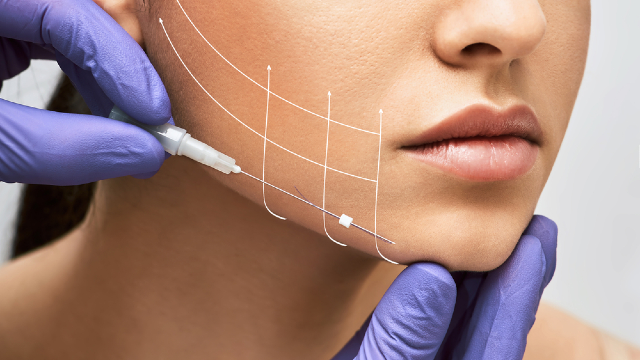
What a Silhouette Soft "Gold Label" Designation Means
Medically reviewed by Dr. SuHyun Kim, Medical Director, Aube Clinic
If you have researched thread-lift providers, you have probably seen a range of titles attached to clinic names and physician profiles. One that appears in connection with Silhouette Soft treatments is the "Gold Label Practitioner" designation. It sounds impressive, and it is often listed alongside other credentials as if it carries the same weight as a medical license or a specialty board. It does not, and understanding the difference matters when you are choosing where to have an aesthetic procedure.
This article explains, in plain terms, what a Silhouette Soft "Gold Label Practitioner" designation actually is, what it can reasonably tell you, and what it cannot tell you. It also walks through the questions a careful patient should ask, and clears up a common point of confusion about the regulatory status of Silhouette Soft threads in the United States. The goal is not to talk you into or out of any treatment, but to help you read provider marketing with a clearer eye.
Where the "Gold Label Practitioner" phrase comes from
Silhouette Soft is a brand of absorbable thread used in non-surgical facial lifting procedures. The threads are made from poly-L-lactic acid (PLLA) and carry small bidirectional cones intended to reposition and support soft tissue while the body gradually absorbs the material over months. The brand is owned by Sinclair, a company that manufactures and markets aesthetic products. Like many device and injectable manufacturers, Sinclair runs training and recognition programs for the clinicians who use its products.
The "Gold Label Practitioner" label is part of that ecosystem. It is a designation the manufacturer applies to practitioners it has trained, recognized, or highlighted in connection with its products. In other words, it originates with the company that sells the threads, not with a government regulator, a medical licensing board, or an independent specialty examination body. That origin is the single most important thing to understand about it.
None of this means the designation is meaningless. A manufacturer that trains a clinician on the correct handling, insertion depth, and vector planning for its specific thread system is providing genuinely useful product-specific education. But the value of that education is bounded. It tells you something about familiarity with one company's product line. It does not, on its own, tell you about a clinician's overall medical qualifications, safety record, or the results any individual patient can expect.
What a Gold Label designation is — and what it is not
Because manufacturer designations are frequently presented in ways that blur the line between marketing recognition and formal medical credentials, it helps to separate the two carefully.
It is a manufacturer training and recognition designation
At its core, a "Gold Label Practitioner" designation is a company recognizing a clinician in relation to its own product. Depending on the program, this can reflect completion of manufacturer training, a level of experience using the product, participation as a reference user, or a marketing relationship. These programs are common across the aesthetics industry. Filler brands, energy-device makers, and thread companies all maintain tiers of recognized users, "key opinion leaders," and trained injectors or practitioners.
Used honestly, a designation like this signals that the clinician has been exposed to the manufacturer's recommended techniques for that specific product. That can be a reasonable data point. It is simply not the same category of information as an independent credential.
It is not a medical board certification
This is the distinction that causes the most confusion. In the United States, board certification is granted by member boards of the American Board of Medical Specialties (ABMS) and similar bodies. Board certification is an independent evaluation of a physician's knowledge, skills, and judgment in a defined specialty, based on standardized training requirements and examinations, and maintained over time. It is issued by a medical body, not by a company that sells a product.
A manufacturer designation is structurally different. It is issued by a commercial entity, its criteria are set by that entity, and it relates to a product rather than to a recognized medical specialty. A "Gold Label Practitioner" designation, no matter how it is styled, is not a board certification and should never be read as one. When you see a manufacturer designation and a board certification listed side by side, they are answering two very different questions.
It is not a regulatory approval or clearance
Regulatory bodies such as the U.S. Food and Drug Administration (FDA) and Korea's Ministry of Food and Drug Safety (MFDS) evaluate products and devices, not the marketing tiers of the clinicians who use them. A manufacturer designation does not represent a government approval of the practitioner, and it does not extend or substitute for the regulatory status of the product itself. If a device or thread is not cleared for a given use in a given country, a practitioner designation cannot change that fact.
It is not a guarantee of skill, safety, or outcome
Perhaps most importantly, no manufacturer designation guarantees that a procedure will be performed skillfully, safely, or with the result a patient hopes for. Thread lifting is an operator-dependent procedure, and outcomes vary from person to person based on anatomy, skin laxity, tissue quality, technique, and realistic goal-setting. A designation cannot promise a particular result, cannot eliminate the normal risks of the procedure, and cannot serve as a warranty. Any provider who implies otherwise is overstating what the label means.
At Aube Clinic, procedures are performed by Dr. SuHyun Kim, the clinic's Medical Director. Manufacturer designations he holds are described as what they are — product-related training and recognition designations — and never as board certifications, regulatory approvals, or guarantees. You can read more about the clinic's approach on the Aube Clinic about-us page.
Silhouette Soft and its U.S. regulatory status
A second point that patients frequently misunderstand involves regulatory status, and it deserves a clear statement.
Silhouette Soft threads are not U.S.-FDA-cleared. There is a related, but separate, product in the United States called Silhouette InstaLift. Silhouette InstaLift received FDA 510(k) clearance in 2015 (K142061). That clearance is for a specific, narrow indication: use in mid-face suspension to fixate the cheek subdermis in an elevated position. It is regulated as an absorbable surgical suture device. It is not the same product as Silhouette Soft, and — this is important — even the cleared InstaLift indication is not a clearance for a "facelift." It describes a temporary soft-tissue repositioning and fixation procedure, not surgery that removes skin or alters the deeper structures of the face.
So when a provider markets Silhouette Soft, it is inaccurate to imply that Silhouette Soft itself carries U.S. FDA clearance on the strength of the InstaLift clearance. They are distinct products with distinct regulatory histories. In markets outside the United States, thread products are governed by local regulators, and clearance in one country does not imply clearance in another. If regulatory status matters to your decision, ask the clinic directly which product will be used and confirm its status with the relevant regulator rather than relying on marketing shorthand.
Why manufacturer designations are so common in aesthetics
It helps to understand why these labels exist at all. Aesthetic medicine is a competitive, product-driven field. Manufacturers of threads, fillers, toxins, and energy devices all compete for the attention of clinicians who will choose their products over a rival's. Training programs and recognition tiers serve two purposes at once: they genuinely teach clinicians how to use a product correctly, and they also build loyalty and give the manufacturer's name a prominent place in that clinician's marketing. Both things can be true simultaneously.
This dual purpose is exactly why a designation should be read carefully. When a title travels from the manufacturer's brochure into a clinic's own advertising, its promotional character can get lost, and it may start to read like an independent honor. A designation is not dishonest, but it is not neutral either — it is a recognition granted by a company with a commercial interest in the product being promoted. Keeping that context in mind lets you appreciate the legitimate value of product training without mistaking it for something it is not.
The same reasoning applies to phrases like "key doctor," "trainer," "reference practitioner," or "recognized center." These are recognition and marketing designations. They may reflect real experience and real training, and that experience can matter, but they are issued within a commercial relationship rather than by an independent medical or governmental body. The healthiest way to treat any of them is as a starting point for questions, not as the end of your evaluation.
How thread lifting actually works — and what it cannot do
Understanding the procedure itself helps put any practitioner designation in context. In a thread lift, absorbable sutures are introduced beneath the skin along planned vectors. The threads and their cones or barbs engage the soft tissue and reposition it, producing a lifting effect. Over the following months, the material is absorbed, and part of the effect is attributed to the tissue response and collagen stimulation that the threads provoke.
The published literature on thread lifting is honest about its limits. Reviews of the technique describe it as a minimally invasive option that can produce a visible but generally modest and temporary improvement, with effects that often diminish within a year or two. Early nonabsorbable barbed sutures were associated with higher revision and complication rates; newer absorbable systems tend to have fewer adverse events, but the long-term evidence base remains limited. Reported side effects are usually minor and self-limiting — swelling, bruising, tenderness, dimpling, or asymmetry — though more significant complications can occur.
The key framing is this: a thread lift is not a surgical facelift. A surgical facelift (rhytidectomy) involves incisions, repositioning of deeper tissues, and removal of excess skin, and it produces longer-lasting change with a correspondingly larger recovery and risk profile. A thread lift is a different, lighter-touch procedure with more modest, temporary results. No manufacturer designation changes that fundamental distinction, and a good provider will set expectations accordingly rather than promising surgical-level change from a non-surgical treatment.
How to evaluate a thread-lift provider
If a "Gold Label Practitioner" designation is only one limited data point, what should actually guide your choice? A more complete evaluation looks past marketing labels to the substance of the care.
Look at medical qualifications and licensure. Confirm that the clinician is a licensed physician and understand the nature of their training. Board certification, where it applies, is issued by recognized medical boards and can be independently verified. Manufacturer designations, by contrast, cannot substitute for licensure or board status. If you are unsure how to read a credential, the ABMS resources on what board certification means are a useful reference point. In practice, verifying licensure is more straightforward than many patients assume. Most countries maintain an official medical register or licensing authority that lists the physicians it has authorized to practice, and many allow the public to search that register by name. If you cannot locate a clinician there, or the clinic cannot point you to the relevant authority, treat that as a reason to ask more questions rather than fewer. It also helps to keep the two categories mentally separated as you read a profile: a licensing authority answers whether someone is permitted to practice medicine at all, while a manufacturer designation only tells you a company has trained or recognized that person on its own product. When both appear in the same list, note which body issued each, because that source — not the styling of the title — is what tells you how much weight it deserves.
Weigh relevant, procedure-specific experience. Familiarity with the specific thread system being used is genuinely relevant, and this is where manufacturer training can add value. Ask how often the provider performs the procedure and how they handle complications if they arise.
Insist on a real consultation. A careful provider assesses your facial anatomy, degree of skin laxity, and goals before recommending anything, and explains why a particular approach — or no procedure at all — makes sense for you. Be cautious of any setting that promises a specific outcome before evaluating you.
Check that expectations are realistic. The right provider will tell you what a thread lift can and cannot achieve for your face, including how modest and temporary the result may be, and will not oversell it as an alternative to surgery when surgery is what your goals would actually require.
Understand the risks and the aftercare plan. Ask about likely side effects, less common but more serious risks, expected recovery, and what follow-up looks like. Clear answers are a good sign; vague reassurance is not.
At Aube Clinic, all procedures are performed personally by Dr. SuHyun Kim, and consultations are conducted one-on-one. If you would like to ask about your own situation, you can reach the team through the Aube Clinic contact-us page.
Questions worth asking during a consultation
Bringing a short list of questions helps you compare providers on substance rather than on marketing. Consider asking:
- Are you a licensed physician, and what is the nature of your medical training?
- Which specific thread product will you use, and what is its regulatory status where relevant?
- How does a thread lift differ from a surgical facelift for my particular goals?
- What result is realistic for my face, and how long is it likely to last?
- What are the common side effects and the less common but more serious risks?
- What does recovery involve, and what is the plan if a complication occurs?
- How do you personally set expectations before a procedure?
The point of these questions is not to catch anyone out, but to move the conversation away from titles and toward the specifics of your care. A confident, honest provider will welcome them.
Frequently Asked Questions
Is a "Gold Label Practitioner" the same as being board-certified?
No. A "Gold Label Practitioner" designation comes from a product manufacturer and relates to that company's product. Board certification is issued by a recognized medical board and reflects standardized specialty training and examination. They are different kinds of recognition, and one cannot substitute for the other.
Does the Gold Label designation mean the procedure is guaranteed to be safe?
No. No designation can guarantee safety or a specific outcome. Thread lifting carries normal risks, and results depend on individual anatomy, technique, and realistic goals. A designation may indicate product training, but it does not remove the procedure's inherent risks or promise a result.
Is Silhouette Soft FDA-cleared in the United States?
Silhouette Soft threads are not U.S.-FDA-cleared. A separate product, Silhouette InstaLift, received FDA 510(k) clearance in 2015 for a specific mid-face suspension indication. The two are different products, and even the InstaLift clearance is not a clearance for a surgical facelift.
Does a manufacturer designation tell me how skilled a provider is?
Only in a limited way. It suggests the provider has had product-specific training or recognition from the manufacturer, which can be useful. It does not, by itself, measure overall surgical judgment, safety record, or the quality of results, so it should be weighed alongside licensure, experience, and a thorough consultation.
Can a thread lift replace a surgical facelift?
No. A thread lift is a non-surgical procedure with more modest and temporary results, while a surgical facelift is a different operation with longer-lasting change and a larger recovery and risk profile. A good provider will explain which approach, if any, actually fits your goals rather than presenting one as a direct substitute for the other.
How should I verify a provider's credentials?
Confirm that the clinician is a licensed physician, and where board certification applies, verify it through the recognized certifying body. Treat manufacturer designations as product-related recognitions rather than medical credentials, and use a detailed consultation to judge whether the provider's assessment and expectations feel honest and thorough.
The Bottom Line
- A Silhouette Soft "Gold Label Practitioner" designation is a manufacturer training and recognition designation — not a medical board certification, a regulatory approval, or a guarantee of skill, safety, or outcome.
- Silhouette Soft threads are not U.S.-FDA-cleared; the related Silhouette InstaLift product has a separate 2015 FDA clearance for a narrow mid-face suspension indication, and even that is not clearance for a surgical facelift.
- A thread lift is not a surgical facelift; results are generally modest, temporary, and vary from person to person.
- Evaluate a provider on licensure, relevant experience, a thorough one-on-one consultation, and realistic expectation-setting — not on marketing titles alone.
- Ask direct questions about the specific product, its regulatory status, likely results, and risks before deciding.
This article is for general educational purposes about non-surgical aesthetic medicine and does not constitute medical advice. It is not a self-diagnosis tool. Individual results vary, and any procedure carries risks. Always consult a qualified, licensed physician about your specific situation before making any treatment decision.
Clinical Safety Notice & Personalized 1:1 Consultation
All aesthetic and regenerative procedures at Aube Clinic (Hoban Summit Edition 2F, 66 Hangang-daero, Yongsan-gu, Seoul) are planned and performed 1:1 by Representative Director Dr. Suhyun Kim after direct facial anatomy and skin evaluation. Treatment outcomes and recovery timelines vary by individual tissue condition, and temporary swelling, bruising, redness, tenderness, or asymmetry may occur.
1:1 Consultation