
1:1 Consultation
Thread Lifting vs Device-Based Lifting: Which Fits You?
Thread lifting vs device-based lifting at Aube Clinic in Seoul: how mechanical lift and RF or ultrasound collagen stimulation differ, and how to choose.
Aube Clinic · Dr. Suhyun Kim, M.D. · Yongsan-gu, Seoul
1:1 Consultation →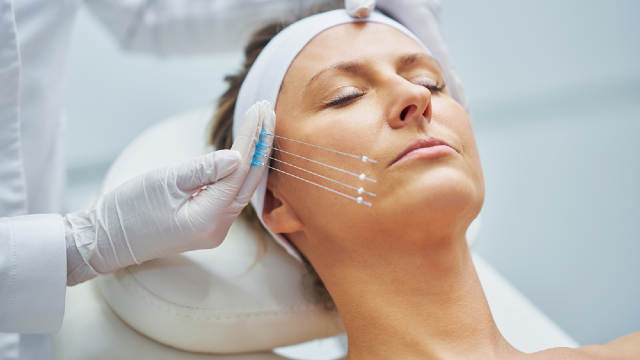
Medically reviewed by Dr. SuHyun Kim, Medical Director, Aube Clinic
Patients weighing non-surgical facial rejuvenation often land on two broad categories: thread lifting, which uses absorbable sutures placed under the skin, and device-based (energy) lifting, which uses radiofrequency (RF) or focused ultrasound to heat tissue. At Aube Clinic in Yongsan-gu, Seoul, both categories are part of the non-surgical lifting menu, and one of the most common consultation questions is simply: which technology fits my goals? This guide compares the two on how they work, what results to expect, timing, candidacy, and when a physician might combine them, so you can approach a consultation with realistic expectations.
Two points frame everything that follows. First, both thread lifting and device-based lifting are non-surgical, and neither is a facelift; they address mild to moderate concerns rather than the pronounced, durable change of surgery. Second, results are gradual, variable, and cannot be guaranteed — outcomes depend on your anatomy, skin condition, and how your body responds.
The Fundamental Difference: Mechanical Lift vs Energy Stimulation
The clearest way to understand these two categories is by what they physically do.
Thread lifting has a mechanical component that energy devices do not. Absorbable threads — often made of materials such as polydioxanone (PDO) or poly-L-lactic acid (PLLA) — are placed under the skin, and barbed or cog threads physically grasp and reposition sagging tissue to produce a visible lift. Guidance from major plastic-surgery bodies describes a thread lift as using temporary sutures to produce a subtle but visible lift, suspending the skin rather than removing it. Alongside that mechanical effect, the suture material triggers a controlled healing response that stimulates new collagen around the thread over time — a process called neocollagenesis. So threads combine an immediate repositioning effect with gradual collagen stimulation, and because the threads are absorbable, the effect is temporary.
Device-based lifting has no mechanical repositioning and no incision. Instead, RF or focused ultrasound heats the deeper skin to stimulate collagen. Radiofrequency warms the dermis broadly so existing collagen contracts and new collagen forms over weeks and months. Focused ultrasound deposits energy at precise focal points at depth, denaturing existing collagen and prompting neocollagenesis. In both cases the change is gradual and depends on the body's own collagen response rather than on tissue being physically pulled into a new position.
In short: threads reposition tissue and stimulate collagen; energy devices only stimulate collagen. That single distinction drives most of the differences that follow.
Immediate vs Gradual: The Timing Difference
Because threads mechanically reposition tissue, part of the lifting effect can be visible soon after the procedure, though some swelling early on can affect the initial appearance. The collagen-stimulating component then develops gradually.
Device-based lifting offers little to no immediate repositioning. Any early tightening is usually mild, and the meaningful change builds over the following weeks and months as collagen remodels. For that reason, energy treatments are frequently planned as a course of sessions.
If a patient's priority is a more immediate, visible repositioning of a specific sagging area, threads may be the more direct route. If the priority is gradual overall firming and skin-quality improvement without any sutures, an energy device may fit better. Neither is "faster" in every sense — threads can show more up front, while energy builds over time — and the right emphasis depends on the goal.
Longevity and Maintenance
Thread lift results are temporary. Because the threads are absorbable, the body breaks them down over months, and guidance from plastic-surgery bodies notes that thread lift results are temporary and eventually the threads dissolve and are absorbed. Maintenance treatments may be considered later, and longevity varies by individual, technique, and thread type.
Device-based results are also not permanent. Collagen remodeling produced by RF or ultrasound gradually gives way to ongoing natural aging, so maintenance sessions are commonly discussed over time. Neither category stops the aging process; both aim to improve firmness or reposition tissue for a period, after which further treatment may be considered.
Because longevity figures vary widely between individuals and depend on factors a general article cannot assess, specific duration claims are best confirmed in consultation rather than assumed from marketing.
Comfort, Downtime, and What the Procedure Feels Like
The two categories feel different because they do different things.
Thread lifting involves placing sutures under the skin, typically using local anesthesia. Patients may experience temporary swelling, bruising, tenderness, or a tight sensation afterward, and there can be a short period of caution around facial movement and sleeping position while tissues settle. These effects are generally temporary but represent a more involved recovery than energy treatments.
Device-based lifting is non-invasive. RF is often described as a warming or mild tightening sensation with same-day return to activities, while focused ultrasound may produce brief moments of deeper warmth as energy is delivered. Downtime is generally limited, with any redness, mild swelling, or tenderness usually settling within hours to a few days.
Because comfort and recovery vary between individuals and between specific techniques, your expected experience should be reviewed with the physician beforehand. You can read more about the clinic's one-on-one model on the Aube Clinic about-us page.
Neither Is a Facelift
This point applies to both categories and is worth stating clearly. A surgical facelift is an operation that uses incisions to reposition deeper tissue and remove excess skin, producing a pronounced, durable change performed by a surgeon. Thread lifting and device-based lifting are both non-surgical and are best suited to mild to moderate laxity.
Threads can reposition tissue to a limited degree and stimulate collagen, but they do not remove excess skin or reposition deep structures the way surgery does. Energy devices firm and improve skin quality but do not physically lift tissue at all. If your concern is significant, advanced sagging, neither non-surgical category will reproduce a surgical result, and an honest consultation should say so rather than overstating what these treatments can achieve.
Which Approach Fits Which Goal and Anatomy?
Matching the technology to the concern is the heart of the decision, and it is individual rather than formulaic.
Thread lifting is often discussed when the goal involves repositioning a specific area of sagging — for example, softening of the jawline or cheeks — where a mechanical lift plus collagen stimulation is desired and the patient accepts a temporary result and a short recovery. Device-based lifting is often discussed when the goal is overall firming and skin-quality improvement without sutures or when a patient prefers minimal downtime, and the choice between RF and ultrasound then depends on factors such as skin thickness and the depth of laxity.
Anatomy matters. The pattern and degree of laxity, skin thickness and quality, the amount of excess skin, age, and personal goals all influence which approach is more appropriate — and in some patients the honest answer is that no non-surgical option will fully meet the goal. At Aube Clinic, Dr. SuHyun Kim assesses these factors individually during a one-patient-per-slot consultation and recommends an approach based on the person in front of him rather than a default treatment. If you would like to ask which route might suit your concern, you can reach the clinic through the Aube Clinic contact page.
Combining Threads and Devices
Thread lifting and device-based lifting are not mutually exclusive, and they are sometimes used together within one individualized plan. Because threads reposition tissue while energy devices stimulate collagen and improve skin quality, a physician may in some cases consider both to address different aspects of a patient's concern — for example, mechanical repositioning in one area alongside broader firming.
Whether combining approaches is appropriate is a clinical judgment, not an automatic recommendation. It depends on your specific pattern of laxity, skin condition, and goals, as well as sensible sequencing and timing. The purpose of a personalized, physician-led assessment is to determine whether threads, an energy device, or a considered combination best fits your concern — not to add treatments for their own sake. As with any of these treatments, combining them does not guarantee a particular outcome, and results still vary between individuals.
Realistic Expectations and Candidacy
Both thread lifting and device-based lifting suit adults with mild to moderate laxity who want a non-surgical option and understand that results are gradual, variable, and temporary. Neither is well suited to advanced sagging with significant excess skin, where surgery may be the more appropriate route.
Certain circumstances may make a treatment unsuitable — for instance, pregnancy or breastfeeding, active infection or inflammation in the area, some skin conditions, or, for energy devices, certain implanted electronic devices in some cases. These are not exhaustive lists, and only an in-person medical assessment can confirm whether a given treatment is safe and appropriate for you. No clinic can guarantee a specific result or duration, and any source promising a dramatic, permanent transformation from a non-surgical treatment is overstating what the technology does.
The Bottom Line
- Thread lifting combines a mechanical lift with collagen stimulation and gives a temporary, absorbable result; device-based lifting (RF or ultrasound) uses no incision and works only by stimulating collagen gradually.
- Threads can show more immediate repositioning of a specific area, while energy devices build firming over weeks to months; the right emphasis depends on your goal.
- Both are non-surgical and neither is a facelift; they suit mild to moderate laxity, results vary between individuals, and outcomes cannot be guaranteed.
- Candidacy depends on anatomy — laxity pattern, skin thickness and excess, age, and goals — so the best approach is decided individually rather than by a fixed rule.
- Threads and devices are sometimes combined within one individualized plan when clinically appropriate; at Aube Clinic, Dr. SuHyun Kim selects and sequences approaches during a one-on-one consultation.
Frequently Asked Questions
What is the main difference between thread lifting and device-based lifting?
Thread lifting places absorbable sutures under the skin that mechanically reposition sagging tissue and also stimulate collagen around the thread. Device-based lifting uses radiofrequency or focused ultrasound to heat the deeper skin and stimulate collagen without any incision or physical repositioning. In short, threads reposition and stimulate, while energy devices only stimulate collagen.
Which one gives faster or more visible results?
Because threads mechanically reposition tissue, part of the effect can be visible soon after the procedure, though early swelling may affect the initial look. Device-based lifting offers little immediate change, with firming building gradually over weeks to months as collagen remodels. Neither is simply "faster" — threads show more up front, while energy develops over time, and results vary.
Are thread lifts or device treatments permanent?
Neither is permanent. Thread lift results are temporary because the threads are absorbable and the body breaks them down over months. Device-based results also fade as natural aging continues, so maintenance sessions are commonly discussed for both. Specific longevity varies by individual and technique and is best confirmed in consultation.
Is either option a substitute for a facelift?
No. A facelift is surgery that repositions deep tissue and removes excess skin for a pronounced, durable change. Thread lifting and device-based lifting are both non-surgical and are best for mild to moderate laxity. If sagging is advanced, neither will reproduce a surgical result, and a consultation should set that expectation honestly.
Can thread lifting and device-based lifting be combined?
Yes, in some cases a physician may use both within one individualized plan, since threads reposition tissue while energy devices stimulate collagen and skin quality. Whether combining them is appropriate depends on your pattern of laxity and goals, along with sensible timing. It is a clinical decision made during consultation, and combining them does not guarantee a particular outcome.
How do I know which treatment is right for me?
The right choice depends on your goal, the pattern and degree of laxity, skin thickness and excess, your age, and your health history. These factors can only be assessed in person, which is why Aube Clinic determines a plan during a one-on-one consultation rather than applying a fixed protocol. Bringing your specific concerns and questions to that consultation is the best way to decide.
This article is for general informational purposes only and does not constitute individualized medical advice; it is not a self-diagnosis tool. Thread lifting and device-based lifting are non-surgical aesthetic treatments, neither is a facelift, results are temporary and vary between individuals and cannot be guaranteed, and candidacy can only be determined through a consultation with a qualified physician.
Clinical Safety Notice & Personalized 1:1 Consultation
All aesthetic and regenerative procedures at Aube Clinic (Hoban Summit Edition 2F, 66 Hangang-daero, Yongsan-gu, Seoul) are planned and performed 1:1 by Representative Director Dr. Suhyun Kim after direct facial anatomy and skin evaluation. Treatment outcomes and recovery timelines vary by individual tissue condition, and temporary swelling, bruising, redness, tenderness, or asymmetry may occur.
1:1 Consultation