
1:1 Consultation
Silhouette Soft vs Traditional PDO Thread Lifting Guide
Silhouette Soft PLLA cone threads versus traditional PDO threads: compare materials, collagen stimulation, longevity, and downtime for non-surgical lift.
Aube Clinic · Dr. Suhyun Kim, M.D. · Yongsan-gu, Seoul
1:1 Consultation →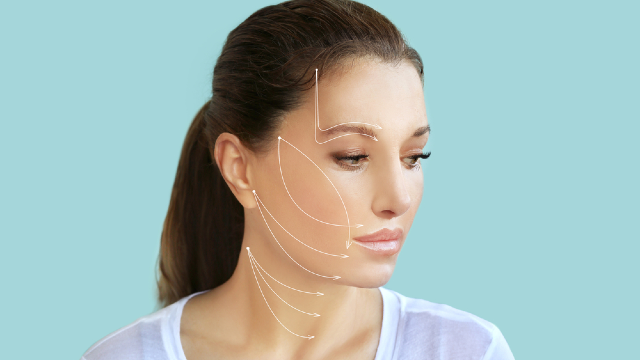
Silhouette Soft vs Traditional PDO Thread Lifting: What's the Real Difference?
Medically reviewed by Dr. SuHyun Kim, Medical Director, Aube Clinic
If you have started researching non-surgical lifting, you have almost certainly run into two names that sound similar but are not the same: Silhouette Soft and "traditional" PDO threads. Both are absorbable thread systems inserted under the skin to reposition sagging tissue and encourage the body to build new collagen. Both are minimally invasive, done in-office, and marketed as a lower-commitment alternative to surgery. Yet the material they are made from, how long that material stays in the skin, and the way each one grips tissue are genuinely different, and those differences shape what a realistic result looks like for you.
This guide breaks down the real, material-level distinctions between Silhouette Soft and conventional PDO threads so you can ask better questions at your consultation. One point deserves to be said up front and repeated: a thread lift, whichever material is used, is not a facelift. It produces a subtle, temporary repositioning of soft tissue and a gradual collagen response, not the deeper structural change a surgical procedure creates. Results vary from person to person, and no thread system can guarantee a specific outcome.
The Bottom Line
- Material is the core difference. Traditional PDO (polydioxanone) threads and Silhouette Soft threads (made of PLLA, sometimes with a PLGA component and anchored by bidirectional cones) are absorbed by the body at different rates, which affects how long collagen stimulation continues.
- PDO tends to dissolve faster; PLLA-based threads tend to last longer. Published research suggests PDO threads typically break down over roughly six months while PLLA is generally absorbed over about a year, though individual results and clinical estimates differ.
- The grip mechanism differs too. Many PDO threads use barbs or cogs to catch tissue, whereas Silhouette Soft uses bidirectional cones designed to hold and lift.
- Regulatory status is not the same as "better." "Silhouette Soft" is a non-US brand, so we do not claim US FDA status for it here. Some PDO threads (such as MINT) hold a US FDA clearance for soft-tissue approximation only, which is not the same as approval as a facelift.
- Neither is a facelift. Both are non-surgical, both give temporary results, and candidacy depends on your anatomy, skin quality, and goals, best assessed in person.
What Thread Lifting Actually Does
A thread lift uses absorbable sutures placed into the deeper layers of the skin to do two jobs at once. First, the thread provides an immediate mechanical effect: it catches lax tissue on its barbs, cogs, or cones and gently repositions it upward, so you often see a modest lift on the treatment day. Second, and more importantly for the longer term, the presence of the thread triggers a controlled healing response. As the body recognizes and gradually absorbs the material, fibroblasts are stimulated to produce new collagen, and sometimes hyaluronic acid and elastin, along the path of the thread. This is why the American Society of Plastic Surgeons describes thread lifting as a minimally invasive procedure that both tightens and stimulates collagen production, offering a more gradual, subtle change than surgery.
Because the mechanical component fades as tissue settles and the biological component depends on your own collagen response, the effect is real but temporary. When the thread fully absorbs, the collagen it helped create is what remains, and that too remodels over time. Understanding this two-part mechanism, immediate lift plus gradual collagen stimulation, is the key to comparing materials honestly.
Traditional PDO Threads: The Basics
Polydioxanone, or PDO, is one of the most widely used thread materials and has a long history as an absorbable surgical suture. In aesthetic use, PDO threads come in several forms: smooth "mono" threads that mainly stimulate collagen, twisted or screw threads for volume, and barbed or "cog" threads designed to grip and lift. For lifting sagging jowls or the mid-face, the barbed and cog varieties are the ones usually discussed.
The defining practical feature of PDO is its absorption timeline. Comparative research on thread materials indicates that PDO threads generally survive in the dermis for around six months before the material is broken down, which is shorter than several newer materials. That does not mean the visible effect vanishes at six months, because the collagen laid down during that window persists and remodels, but it does mean the direct mechanical scaffold is relatively short-lived. PDO is often chosen for patients who want a lighter, shorter-commitment treatment, or as part of a maintenance approach with periodic repeat sessions.
It is worth being precise about regulation here. In the United States, certain barbed PDO thread products have received FDA clearance. For example, the MINT thread family holds a US FDA 510(k) clearance indicated for soft-tissue approximation where a barbed absorbable suture is appropriate. That is a suture clearance, not evidence that a thread lift equals a surgical facelift, and clearance status varies by product and by country. When a specific product is mentioned to you, ask exactly what it is cleared or approved for.
Silhouette Soft: PLLA/PLGA Bidirectional Cones
Silhouette Soft belongs to a different material family. Rather than relying on barbs cut into the thread, it uses a smooth suture fitted with a series of bidirectional cones. When the thread is placed and the two sides are drawn together, the cones on either side of the midpoint grip the tissue and compress it, creating the lift. The cones and thread are made primarily of poly-L-lactic acid (PLLA), often combined with a glycolide component (PLGA), which are well-known absorbable materials used in medicine.
The reason material matters is longevity of the collagen-stimulating effect. An evidence-based evaluation of absorbable poly(L-lactide) based threads for soft-tissue repositioning notes that these materials degrade more slowly than PDO and are recognized for their collagen-stimulating properties, and comparative studies suggest PLLA is typically absorbed over roughly twelve months. A longer material presence can mean a longer window of collagen stimulation, which is a large part of why PLLA-based cone threads are often positioned as the longer-lasting option. That said, "longer-lasting" still means temporary, results still vary, and the cone design suits some faces and tissue types better than others.
Because "Silhouette Soft" is a brand marketed outside the United States, we do not assert a US FDA status for it in this article. A related US product exists, but that is a separate clearance for a separate product. If US regulatory status matters to you, raise it directly with your provider so you get accurate, product-specific information.
Head-to-Head: Material, Longevity, and Lift
Putting the two side by side clarifies where the real trade-offs lie.
Material and absorption. PDO is absorbed relatively quickly, on the order of about six months for the material itself. PLLA-based Silhouette Soft threads degrade more slowly, on the order of about a year. Neither timeline is a promise about how long you will "look lifted," because that depends on your collagen response, but it does frame how long the thread is actively working.
Grip mechanism. Traditional lifting PDO threads generally use barbs or cogs cut into the thread to hook tissue. Silhouette Soft uses molded bidirectional cones. Both approaches can reposition tissue; the cone system is designed to distribute hold across the cones, while barbed systems rely on many small anchor points. Which performs better is not a universal answer, it depends on the area treated and individual anatomy.
Collagen stimulation. Both materials stimulate collagen, which is the durable part of the result. Because PLLA persists longer, its collagen-stimulating phase is generally longer, one reason it is often chosen when a patient prioritizes longevity over a lighter, more frequent maintenance rhythm.
Commitment and maintenance. PDO can suit patients who prefer a lower-commitment treatment or a maintenance schedule with more frequent, lighter sessions. PLLA-based cone threads may appeal to patients who want to space treatments further apart. Cost is not covered here, and you should confirm any pricing and scheduling directly with the clinic.
The honest summary: neither material is universally "best." The right choice depends on the degree of laxity, where it is, your skin thickness and quality, and how you want to manage upkeep over time.
Regulatory Status: What "FDA-Cleared" Really Means (and Doesn't)
Regulatory language is one of the most misunderstood parts of thread marketing, so it is worth slowing down. "FDA-cleared" (a 510(k) clearance) means a device was found substantially equivalent to an existing legally marketed device; it is not the same as "FDA-approved," and it is tied to a specific indication. In the case of barbed PDO products like MINT, the cleared indication is soft-tissue approximation where a barbed absorbable suture is appropriate. That is meaningfully different from a claim that the procedure lifts your face like surgery does.
Two takeaways follow. First, a clearance is product-specific and indication-specific, so it does not automatically transfer to a different brand, a different country's market, or a different intended use. Second, because Silhouette Soft is marketed outside the US, this article makes no US FDA claim for it. If regulatory standing is part of your decision, ask your provider to show you exactly what a given product is cleared or approved for, and in which market.
Downtime and Recovery
One reason thread lifts appeal to busy patients is that they are typically performed under local anesthesia, and many people return to normal activities relatively quickly. Common, expected after-effects for either material include some swelling, bruising, tenderness, mild tightness, and small puckers or dimples that usually settle as tissue relaxes. These are generally temporary. As with any procedure that breaks the skin, there are risks, including infection, thread visibility or extrusion, asymmetry, and dissatisfaction with the degree of lift, which is why in-person assessment and realistic expectations matter.
Recovery specifics are individual. Your provider will give you aftercare guidance such as sleeping position, avoiding wide mouth movements or facial massage for a period, and what to watch for. The material choice, PDO versus PLLA cone, does not dramatically change the fundamentals of recovery, though your provider can tell you what to expect for your specific plan.
Which One Is Right for You?
Rather than asking "which thread is best," a more useful question is "which material and technique best match my anatomy and goals?" Someone with early, mild laxity who wants a light touch and does not mind periodic maintenance may do well with a PDO-based approach. Someone who wants to prioritize a longer collagen-stimulating window and space treatments further apart may lean toward PLLA-based cone threads. Skin thickness, the specific zones of sagging, prior treatments, and your tolerance for maintenance all feed into the decision.
Two boundaries are worth keeping in view. First, threads are not a substitute for surgery when laxity is advanced; in those cases a thread lift may underdeliver, and a consultation should say so plainly. Second, whatever the material, the result is temporary and varies between individuals. A thoughtful provider will tell you when threads are a reasonable fit and when they are not.
How Aube Clinic Approaches Thread Selection
Aube Clinic is a non-surgical aesthetic clinic in Seoul focused on facial lifting with threads, injectables, and energy-based devices. Thread selection is not treated as a one-size decision. During a one-on-one consultation, Dr. SuHyun Kim, the clinic's Medical Director, assesses the areas of concern, skin quality, and your goals before recommending a material and technique, and explains what a realistic, temporary result looks like for you rather than promising a fixed outcome. You can learn more about the clinic's approach on the about us page, and you can reach the team through the contact page to ask questions before you travel or book.
Because candidacy, material choice, and expectations are so individual, the most reliable next step is a personalized assessment rather than choosing a thread from an article.
Frequently Asked Questions
Is Silhouette Soft better than PDO threads?
Neither is universally better; they are different materials suited to different goals. PLLA-based Silhouette Soft threads generally last longer and stimulate collagen over a longer window, while PDO threads are absorbed faster and can suit a lighter, maintenance-oriented approach. The right choice depends on your anatomy, skin quality, and how you prefer to manage upkeep, which is best decided in a personal consultation.
Which thread lasts longer, PLLA or PDO?
Comparative research suggests PDO threads are typically absorbed over roughly six months, while PLLA is generally absorbed over about twelve months. Because the material's presence drives part of the collagen stimulation, PLLA-based threads are often described as longer-lasting. Even so, all thread results are temporary and vary from person to person.
Are thread lifts the same as a facelift?
No. A thread lift is a minimally invasive, non-surgical procedure that produces a subtle, temporary repositioning and gradual collagen stimulation. A surgical facelift is a different category of procedure with a different degree of change and recovery. Threads are not a replacement for surgery when laxity is advanced.
Is Silhouette Soft FDA-approved in the United States?
This article makes no US FDA claim for Silhouette Soft because it is a brand marketed outside the United States. Some barbed PDO products, such as MINT, hold a US FDA clearance for soft-tissue approximation only, which is not the same as approval as a facelift. Ask your provider for accurate, product-specific and market-specific regulatory information.
How much downtime should I expect?
Thread lifts are usually done under local anesthesia, and many people resume normal activities fairly quickly. Temporary swelling, bruising, tenderness, mild tightness, and small dimples are common and generally settle over days to a couple of weeks. Your provider will give you individualized aftercare instructions.
Can PDO and PLLA threads be combined?
In some plans, different thread types or thread and non-thread treatments are used together to address different concerns, when clinically appropriate. Whether a combination suits you depends on your anatomy and goals and should be decided during an in-person assessment. This article does not cover pricing or specific packages.
Do thread lift results happen immediately?
You often see a modest lift on the day of treatment from the mechanical effect of the thread, but the more meaningful change develops gradually as collagen forms and swelling settles. Because part of the result is biological, the final appearance takes time and varies between individuals.
This article is for general educational purposes about non-surgical aesthetic medicine. It is not medical advice, not a treatment recommendation, and not a self-diagnosis tool. Thread lifting is non-surgical, results vary between individuals and are temporary, and it is not a facelift. Any procedure carries risks. Please consult a qualified medical professional about your individual situation before making treatment decisions.
Clinical Safety Notice & Personalized 1:1 Consultation
All aesthetic and regenerative procedures at Aube Clinic (Hoban Summit Edition 2F, 66 Hangang-daero, Yongsan-gu, Seoul) are planned and performed 1:1 by Representative Director Dr. Suhyun Kim after direct facial anatomy and skin evaluation. Treatment outcomes and recovery timelines vary by individual tissue condition, and temporary swelling, bruising, redness, tenderness, or asymmetry may occur.
1:1 Consultation