
1:1 Consultation
Signature Dermal Regeneration and Skin Boosters Explained
How AUBE Clinic's Signature Dermal Regeneration Therapy and skin boosters support skin quality, their regulatory status, and why results are not assured.
Aube Clinic · Dr. Suhyun Kim, M.D. · Yongsan-gu, Seoul
1:1 Consultation →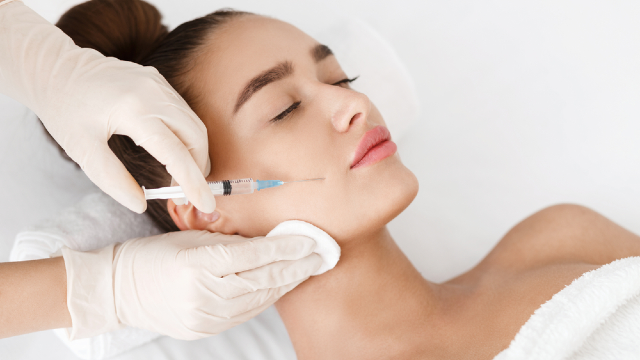
Medically reviewed by Dr. SuHyun Kim, Medical Director, Aube Clinic
Skin boosters and regenerative injectable treatments have become a popular category for people who want to improve the quality of their skin — its hydration, smoothness, and overall texture — rather than change the shape or structure of the face. At Aube Clinic in Seoul, this category includes a range of skin boosters alongside what the clinic calls Signature Dermal Regeneration Therapy. This guide explains, in clear and measured terms, what these treatments are, how they differ from structural procedures like lifting, what their regulatory status means for a U.S. reader, and what results are realistic. The goal is honest, useful preparation for a consultation — not a promise of transformation.
One framing point belongs at the top. These are treatments aimed primarily at skin hydration and skin quality, and they should be understood in those modest, realistic terms. Marketing language sometimes reaches for words like "miracle regeneration" or "cellular renewal," but the sensible expectation is a gradual, variable improvement in how the skin looks and feels. Results differ from person to person, effects are generally temporary, and nothing here is guaranteed.
What Are Skin Boosters?
"Skin booster" is a broad, informal term for injectable treatments delivered into or just beneath the skin to improve hydration and skin quality across an area, rather than to add volume to a specific contour the way a traditional filler does. A published overview of injectable skin boosters describes them as products used to improve skin hydration, elasticity, and overall quality, typically through a series of small microinjections spread across the treatment area. Several distinct types fall under this umbrella, and they are not interchangeable.
Hyaluronic-acid (HA) based boosters
Some skin boosters are based on hyaluronic acid (HA), a naturally occurring sugar molecule that binds water. Used in a "microdroplet" or lightly distributed form, HA-based boosters aim to improve skin smoothness and hydration rather than to reshape features. For U.S. context, it is worth noting that one HA microdroplet product, SkinVive by Juvéderm, is FDA-approved — specifically, it is indicated for intradermal injection to improve skin smoothness of the cheeks in adults aged 21 and older. That approval is product-specific and area-specific; it does not extend to every HA booster on the market, and many boosters used in Korea and elsewhere are different products with different regulatory status.
Polynucleotide (PN / PDRN) boosters
A widely discussed category is polynucleotide (PN) or polydeoxyribonucleotide (PDRN) boosters, which are derived from purified DNA fragments (often from salmon). A product in this family that patients frequently ask about is Rejuran. These are marketed for skin hydration and quality, and a systematic review in esthetic medicine describes interest in their use as biostimulatory skin treatments. Two cautions matter here. First, the evidence, while growing, is still developing, and reviews note the need for more rigorous study. Second, and importantly for a U.S. reader: polynucleotide boosters such as Rejuran are approved by Korea's Ministry of Food and Drug Safety (MFDS), not by the U.S. FDA. They are Korean-market products in this respect, and that distinction is a fair thing to weigh.
PRP and exosome-based approaches
Some regenerative skin treatments use platelet-rich plasma (PRP) — a concentrate prepared from a patient's own blood — or exosome-based products. These deserve a clear caution: PRP for cosmetic skin use and exosome products are not FDA-approved for these purposes, and the FDA has issued a consumer alert about regenerative products noting there are no FDA-approved exosome products. Interest in these approaches exists in the literature, but the evidence is limited and not standardized, so they should be approached as elective, unproven options rather than established treatments.
Signature Dermal Regeneration Therapy
Aube Clinic's Signature Dermal Regeneration Therapy is presented as a regenerative approach delivered into the dermal layer of the skin, aimed at improving skin quality and texture rather than lifting or restructuring the face. The clinic frames it as a "signature" combination for patients whose primary concern is the condition of the skin itself — its firmness at a surface level, smoothness, and hydration.
Two points of precision are important. First, the specific materials used in such a program, and their regulatory status, should be confirmed directly with the clinic; a U.S. reader should not assume that a product used in a Korean clinic carries U.S. FDA approval. Where a treatment is described in regenerative or collagen-related terms, it is reasonable to ask exactly what is being injected and what evidence and regulatory clearance, if any, apply. Second, "regeneration" in this context is best read as a description of intent — encouraging the skin's own quality over time — rather than a guaranteed, measurable structural change. As with skin boosters generally, results vary between individuals, the effect is not permanent, and no specific outcome can be promised.
Regulatory Status: What U.S. Readers Should Know
Because Aube Clinic serves international patients, regulatory context deserves to be stated precisely and without overstatement:
- SkinVive by Juvéderm (an HA microdroplet product) is FDA-approved for improving cheek skin smoothness in adults 21 and older — a narrow, product-specific approval.
- Polynucleotide boosters such as Rejuran are MFDS-approved in Korea and are not U.S. FDA-approved.
- PRP for cosmetic skin use and exosome products are not FDA-approved; the FDA has specifically noted there are no FDA-approved exosome products.
The FDA has approved a range of specific dermal fillers in the United States, but approval attaches to particular products for particular uses. If regulatory status matters to your decision, ask the clinic which product is proposed and consult official regulators such as the FDA directly. Treatment at Aube Clinic takes place in Seoul under the applicable Korean framework, which is a separate system from the FDA.
Skin Boosters Versus Dermal Regeneration: Different Emphasis, Similar Goal
People often ask how a skin booster differs from a "dermal regeneration" program. In practice they sit on a spectrum with a shared goal — better skin quality — but different emphases. A skin booster is typically a defined injectable product delivered in microdroplets to hydrate and improve texture, while a "dermal regeneration" program may combine a booster-type approach with additional regenerative elements the clinic uses together. Neither is a lifting procedure, and neither adds structural volume the way a contouring filler does. What both share is a focus on the skin's surface qualities rather than the underlying facial framework — which is exactly why they are sometimes combined with a lifting or device-based treatment for a person who wants both firmness and texture addressed.
That combination logic is part of how Aube Clinic frames these treatments: skin quality work such as boosters and Signature Dermal Regeneration Therapy can complement structural treatments in an individualized plan. Whether a combination is appropriate for you is a consultation decision, not a default. You can read more about the clinic's single-physician, one-on-one approach on the Aube Clinic about-us page.
What to Expect — and What Not to Expect
Realistic expectations are central to being satisfied with any skin-quality treatment. Skin boosters and regenerative dermal treatments are generally aimed at gradual improvements in hydration, smoothness, and overall skin quality, and they typically involve a series of sessions spaced over weeks rather than a single dramatic visit. The number and spacing of sessions depend on your skin condition and goals and are determined individually rather than by a fixed package.
Just as important is what these treatments do not do. They are not a facelift, they do not reshape facial structure, and they are not permanent — maintenance over time is common because the effects fade. Results vary from person to person and cannot be guaranteed, and any source promising a certain, dramatic, or lasting "regeneration" is overstating what these treatments offer. A good clinic sets modest, honest expectations and is willing to say when a goal would be better served by a different treatment, or by no treatment at all.
Safety, Side Effects, and Candidacy
As with any injectable, skin boosters and regenerative dermal treatments carry risks. Common, usually temporary effects include redness, swelling, bruising, tenderness, and small bumps at the injection sites, which typically settle within days. Less common issues can include lumps or nodules and, rarely, infection or inflammatory reactions. Treatments that use a patient's own blood, such as PRP, add the ordinary risks associated with a blood draw. Anyone with certain skin infections, bleeding tendencies, or specific medical conditions, and those who are pregnant or breastfeeding, may not be suitable candidates, which is one of many reasons an individual assessment matters.
At Aube Clinic, injectable treatments are performed by Dr. Kim, the Medical Director, in a one-on-one setting, with a review of your medical history, medications, and skin condition as part of planning. Suitability, the choice of product, and the number of sessions are decided individually. This article does not discuss pricing; costs and product selection are specific to each person and should be confirmed with the clinic. To ask about a consultation, use the Aube Clinic contact-us page.
The Bottom Line
- Skin boosters and Signature Dermal Regeneration Therapy target skin quality and hydration, not structural lifting or facial reshaping, and are best approached with modest, realistic expectations.
- Regulatory status varies by product: SkinVive (an HA microdroplet) is FDA-approved for cheek smoothness, while polynucleotide boosters such as Rejuran are MFDS-approved and not U.S. FDA-approved.
- PRP for cosmetic skin use and exosome products are not FDA-approved, and the FDA notes there are no FDA-approved exosome products; these should be treated as elective, unproven options.
- Results vary between individuals, effects are temporary, and nothing is guaranteed; these treatments usually involve a series of sessions and ongoing maintenance.
- Candidacy, product choice, and session planning are individual, assessed by a qualified physician; this guide does not cover pricing.
Frequently Asked Questions
What is the difference between a skin booster and a dermal filler?
A skin booster is delivered in small microinjections across an area to improve hydration and overall skin quality, rather than to build volume in a specific contour. A traditional dermal filler is placed to add volume or definition to a particular feature. They serve different goals, and skin boosters are generally about the surface quality of the skin rather than facial structure.
Are these skin boosters FDA-approved?
It depends on the specific product. SkinVive by Juvéderm, an HA microdroplet product, is FDA-approved for improving cheek skin smoothness in adults 21 and older. Polynucleotide boosters such as Rejuran are approved in Korea by the MFDS and are not U.S. FDA-approved, and PRP for cosmetic use and exosome products are not FDA-approved. Ask the clinic which product is proposed and check official regulators.
Does dermal regeneration therapy really regenerate my skin?
"Regeneration" here describes the intent of improving skin quality over time, not a guaranteed structural change. Realistic expectations are gradual improvements in hydration, smoothness, and texture that vary from person to person and are not permanent. Any claim of a certain, dramatic, or lasting result overstates what these treatments can do.
How many sessions will I need?
Skin boosters and regenerative dermal treatments are typically planned as a series of sessions spaced over weeks, with the exact number and spacing based on your skin condition and goals. There is no single package that fits everyone, and Aube Clinic determines a plan during consultation. Because effects are temporary, maintenance sessions over time are common.
What side effects are possible?
Common, usually temporary effects include redness, swelling, bruising, tenderness, and small bumps at the injection sites, which generally settle within a few days. Less common issues include lumps or nodules and, rarely, infection or inflammatory reactions. Treatments using your own blood add the ordinary risks of a blood draw, and all of these should be discussed during your consultation.
Can these treatments be combined with lifting?
Yes, skin-quality treatments such as boosters and Signature Dermal Regeneration Therapy can complement structural treatments like thread lifting or device-based lifting when clinically appropriate, because they address different concerns. Whether a combination suits you is decided individually during a consultation with Dr. Kim rather than assumed in advance.
Disclaimer
This article is for general educational purposes about non-surgical aesthetic-medicine treatments and does not constitute medical advice, diagnosis, or a treatment recommendation. Skin boosters and regenerative dermal treatments are non-surgical procedures that carry risks; regulatory status varies by product, individual candidacy must be assessed by a qualified clinician, and results vary and cannot be guaranteed. This content is not a self-diagnosis tool. If you experience warning signs after an injectable treatment, such as severe pain, spreading redness, or signs of infection, seek medical attention. Always consult a qualified healthcare professional about your specific situation before making treatment decisions.
Clinical Safety Notice & Personalized 1:1 Consultation
All aesthetic and regenerative procedures at Aube Clinic (Hoban Summit Edition 2F, 66 Hangang-daero, Yongsan-gu, Seoul) are planned and performed 1:1 by Representative Director Dr. Suhyun Kim after direct facial anatomy and skin evaluation. Treatment outcomes and recovery timelines vary by individual tissue condition, and temporary swelling, bruising, redness, tenderness, or asymmetry may occur.
1:1 Consultation