
1:1 Consultation
Is Thread Lifting Safe? What US Patients Should Know
Thread lifting uses absorbable sutures to reposition sagging tissue. Learn how safe it truly is, realistic risks, candidacy, and why it is not a facelift.
Aube Clinic · Dr. Suhyun Kim, M.D. · Yongsan-gu, Seoul
1:1 Consultation →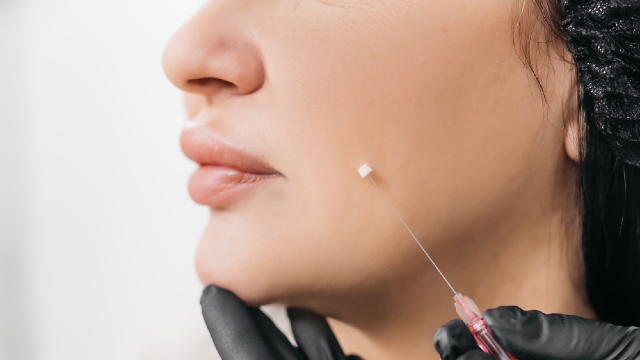
Medically reviewed by Dr. SuHyun Kim, Medical Director, Aube Clinic
Thread lifting has become one of the most talked-about non-surgical options for people who notice mild sagging along the cheeks, jawline, or brow but are not ready for surgery. If you are researching the procedure from the United States, whether close to home or as part of a trip abroad, the most important question is a practical one: is it actually safe? The honest answer is that thread lifting is generally considered a low-to-moderate risk procedure when performed by a qualified provider on an appropriate candidate, but it is not risk-free, and it is not a replacement for a surgical facelift. This article explains how thread lifting works, what the realistic risks are, who tends to be a suitable candidate, and the questions you should ask before you commit.
How Thread Lifting Works
A thread lift uses fine, absorbable sutures, most commonly made from materials such as polydioxanone (PDO), poly-L-lactic acid (PLLA), or polycaprolactone (PCL). The threads are placed under the skin through tiny entry points using a needle or cannula. Many lifting threads carry small barbs, cones, or cogs along their length. These features grip the soft tissue so that, when the thread is gently drawn, mildly loose tissue can be repositioned to a slightly higher, more supported position.
Beyond the immediate mechanical effect, the threads also prompt a biological response. As the body slowly breaks the material down over months, it stimulates a mild collagen-building reaction around the thread path. This is why practitioners describe two phases: an initial repositioning effect and a more gradual firming effect as new collagen forms.
It is essential to understand the scale of what this achieves. Thread lifting produces a modest and temporary improvement. It is not a facelift. A surgical facelift removes and repositions tissue and skin under the skill of a surgeon in an operating setting, and its effects are of a different magnitude and duration. Thread lifting is a minimally invasive alternative for people with mild laxity who want subtle refinement with less downtime, not the dramatic and long-lasting change that surgery can provide. No provider can guarantee a specific outcome, and individual results vary.
Is Thread Lifting Safe? The Realistic Picture
In the medical literature, absorbable thread lifting is generally regarded as a well-tolerated procedure associated with mostly minor and reversible side effects when candidates are well selected and the person performing it understands facial anatomy. That is genuinely reassuring, but "generally well-tolerated" is not the same as "no risk." Being an informed patient means knowing the full range of possible outcomes.
Common, usually short-lived effects include:
- Bruising at or near the entry points
- Swelling and mild tenderness for several days
- A feeling of tightness or pulling as the tissue settles
- Small, temporary dimpling or puckering of the skin, especially early on
Less common but more significant risks include:
- Visible or persistent dimpling or skin irregularity that does not settle on its own
- Asymmetry, where one side sits differently from the other
- Thread extrusion, where a thread tip works its way toward or through the skin surface
- Infection at an insertion point, which needs prompt medical attention
- Palpable threads or a sensation of the thread under the skin
- Rare vascular events, if a vessel is affected during placement
Serious complications are uncommon, but they are the reason provider skill matters so much. A clinician who knows the layered anatomy of the face, places threads at the correct depth, and manages any problems quickly is central to keeping the procedure as safe as possible. You can learn more about how Aube Clinic approaches its non-surgical, one-on-one care model on the about-us page.
Who Is a Good Candidate?
Thread lifting tends to suit people with mild to moderate sagging who still have reasonable skin quality and are looking for a subtle lift rather than a transformation. Good candidates typically:
- Notice early jowl, cheek, or brow laxity but do not have heavy, advanced sagging
- Want a shorter-recovery option and understand results are temporary
- Are in good general health and not pregnant
- Have realistic expectations and understand thread lifting is not a facelift
People with significant skin excess, very heavy tissue, active skin infections, certain bleeding tendencies, or unrealistic expectations are often better served by other options, which a qualified provider can discuss during an assessment. Because suitability depends on your individual anatomy, health history, and goals, candidacy can only be confirmed in a proper consultation rather than online. If you are unsure whether you are a candidate, you can reach the clinic through the contact-us page to arrange an assessment.
Choosing a Qualified Provider
Much of thread lifting's safety comes down to who performs it and how carefully candidacy is judged. When you evaluate any provider, in the US or abroad, it is reasonable to ask:
- Who will personally perform the procedure, and what is their experience with thread lifting specifically?
- What thread material will be used, and why is it appropriate for my concern?
- What are the realistic risks in my case, and how are complications handled?
- What does recovery look like, and when should I expect the effect to settle?
At Aube Clinic, procedures are performed personally by the Medical Director, Dr. SuHyun Kim, in a one-on-one setting with one patient per time slot. Note that specific details you cannot verify online, such as exact protocols or how particular situations are managed, should be confirmed directly with the clinic in writing before you proceed.
Regulatory Status: What US Patients Should Know
Regulatory status for lifting threads differs by country and by product. In the United States, some absorbable suture devices have received FDA clearance for specific, narrowly defined indications, and clearance is not the same as a broad endorsement of a cosmetic "lift." Many thread products used internationally are not FDA-cleared for facial lifting in the US at all. This does not automatically make a product unsafe, but it does mean you should not assume a specific thread is "FDA-approved for a facelift," because such a claim is generally not accurate. When a specific product's regulatory status matters to you, ask the clinic exactly which device will be used and verify its status independently rather than relying on marketing language.
What Recovery Typically Looks Like
Most people can return to everyday activities relatively quickly, though this varies. Swelling and bruising are usually most noticeable in the first several days and then subside. Providers commonly advise avoiding strenuous exercise, wide facial movements, facial massage, and sleeping face-down for a short period so the threads can settle. Because guidance depends on the threads used and your response, follow the specific aftercare instructions your provider gives you, and report anything that seems wrong, such as increasing pain, spreading redness, or signs of infection, promptly.
Frequently Asked Questions
Is a thread lift the same as a facelift?
No. A thread lift is a minimally invasive procedure using absorbable sutures to reposition mildly loose tissue, producing a modest and temporary result. A surgical facelift is a different procedure of a different magnitude and durability. Thread lifting should never be described as equivalent to a facelift.
Does thread lifting hurt?
Most people describe the procedure as tolerable rather than painful, and providers typically use measures to keep you comfortable during placement. Afterward, mild soreness, tightness, and tenderness for a few days are common. Any pain that is severe or increasing should be reported to your provider right away.
How safe is thread lifting overall?
Absorbable thread lifting is generally considered well-tolerated with mostly minor, reversible side effects when performed by a qualified provider on a suitable candidate. It is not risk-free, and rare but more serious complications, including infection and vascular events, are possible. No outcome can be guaranteed, and results vary between individuals.
What are the most common side effects?
Bruising, swelling, tenderness, temporary tightness, and small, short-lived dimpling are the most frequently reported effects. These usually settle within days to a couple of weeks. More significant issues such as persistent dimpling, asymmetry, thread extrusion, or infection are less common and may need follow-up care.
Can thread lift complications be corrected?
Many minor issues, such as early dimpling, settle on their own or can be managed by your provider. More significant problems may require additional treatment. This is one reason choosing an experienced provider and confirming how complications are handled before your procedure is so important.
Are the results permanent?
No. Thread lifting produces a temporary improvement because the threads are absorbable and gradually broken down by the body. Longevity varies by material and individual, and maintenance sessions are common for people who want to sustain the effect over time.
The Bottom Line
- Thread lifting uses absorbable sutures to reposition mildly sagging tissue and stimulate collagen; it is a non-surgical, minimally invasive option, not a facelift.
- It is generally well-tolerated in the literature, but realistic risks, including bruising, swelling, dimpling, asymmetry, extrusion, infection, and rare vascular events, are possible.
- Results are modest, gradual, and temporary, and no specific outcome can be guaranteed; individual results vary.
- Candidacy depends on your anatomy, skin quality, and goals, and can only be confirmed through a proper in-person assessment.
- Provider skill and honest expectation-setting are central to safety; confirm specifics directly with the clinic.
This article is for general educational purposes about non-surgical aesthetic medicine and does not constitute medical advice. Outcomes and risks vary from person to person, and nothing here should replace a personal evaluation by a qualified provider. It is not a self-diagnosis tool. If you are considering thread lifting, discuss your health history, goals, and the specific risks in your case directly with a licensed clinician.
Clinical Safety Notice & Personalized 1:1 Consultation
All aesthetic and regenerative procedures at Aube Clinic (Hoban Summit Edition 2F, 66 Hangang-daero, Yongsan-gu, Seoul) are planned and performed 1:1 by Representative Director Dr. Suhyun Kim after direct facial anatomy and skin evaluation. Treatment outcomes and recovery timelines vary by individual tissue condition, and temporary swelling, bruising, redness, tenderness, or asymmetry may occur.
1:1 Consultation