
1:1 Consultation
How a Personalized Thread-Lift Treatment Plan Is Designed
How a personalized thread-lift plan is designed around your goals, facial anatomy, and skin laxity, with realistic expectations set during a consultation.
Aube Clinic · Dr. Suhyun Kim, M.D. · Yongsan-gu, Seoul
1:1 Consultation →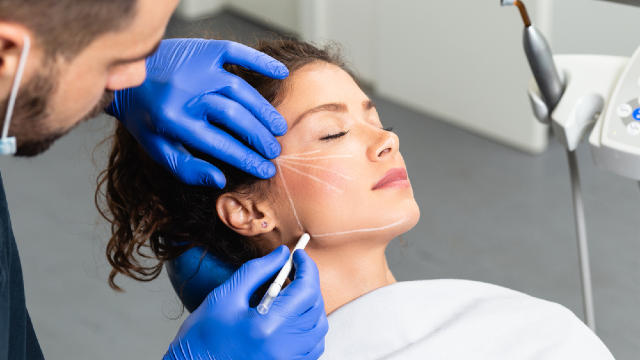
Medically reviewed by Dr. SuHyun Kim, Medical Director, Aube Clinic
No two faces age in the same way, and no two people want exactly the same thing from a treatment. That is why a thoughtful thread-lift plan is not a fixed menu but an individualized assessment built around one person's anatomy, goals, and skin. This article explains, in general terms, how good individualized planning for a non-surgical thread lift works: what a clinician looks at, how the plan is shaped, and why realistic expectations are part of the plan itself rather than an afterthought.
There is no single proprietary formula that guarantees a result, and this article does not claim one. Instead, it describes the kind of careful, consultation-driven thinking that responsible providers apply. Understanding that process helps you have a more useful conversation with any clinician and recognize when planning is being done well.
Planning starts with your goals
Before anatomy or thread types enter the picture, a good plan starts with a clear understanding of what you actually want to change. Two people may both describe wanting to "look less tired," but one may be focused on a heavy jawline while the other is bothered by mid-face flattening or a drooping brow. Vague goals lead to vague plans, so a careful clinician spends time translating how you feel about your appearance into specific, describable areas and priorities.
This stage also surfaces expectations that need to be gently reset. Some people arrive hoping a thread lift will do what only surgery can, or expecting a permanent change from a temporary procedure. Naming those expectations early — and comparing them honestly against what a thread lift can realistically deliver — is one of the most valuable parts of planning. It is far better to align on what is achievable before any procedure than to discover a mismatch afterward.
Assessing facial anatomy and skin laxity
Once goals are clear, the clinician assesses the face as it actually is. Individualized planning depends on a physical evaluation that typically considers several things:
- The pattern and degree of laxity. How much soft tissue has descended, and where? Mild early laxity behaves differently from more advanced sagging, and the distinction matters for whether a thread lift is a sensible option at all.
- Skin quality and thickness. Thicker, more elastic skin responds differently than thin or heavily sun-damaged skin, and this influences technique and expectations.
- Underlying structure. Bone support, fat distribution, and muscle activity all shape how the face looks and how it will respond to repositioning.
- Symmetry and existing asymmetries. Most faces are naturally somewhat asymmetric, and noting this beforehand helps set expectations and informs the plan.
- Overall health and history. Relevant medical history, medications, prior procedures, and factors that affect healing are part of a responsible assessment.
Beyond these individual factors, a clinician also weighs how they interact. Skin laxity rarely appears in isolation; it usually accompanies changes in facial volume, skin texture, and the position of the underlying fat pads, and it is the combination of these elements that shapes an individual result. Age, lifestyle factors such as sun exposure and smoking, and how quickly a person tends to heal all inform how conservative or how staged a plan should be. Facial movement and expression matter too, because dynamic, mobile areas behave differently from more static ones. A careful clinician treats each of these as a variable to be assessed rather than a fixed rule, adjusting the approach to the person in front of them instead of applying a single template to every face.
This evaluation is also where a clinician determines whether a thread lift is appropriate for you in the first place. Sometimes the honest conclusion is that another approach — or a combination, or no procedure at all — better fits the goals. A plan that never considers the possibility of "this is not the right treatment for you" is not a real plan. You can learn more about the clinic's consultation-based approach on the Aube Clinic about-us page.
Choosing thread type and planning vectors
Thread lifting is not a single product but a family of absorbable materials and designs. Different threads vary in their composition, in the presence and shape of cones or barbs, and in how they are intended to engage and support tissue. Part of individualized planning is matching the type and configuration of thread to the specific area, the degree of laxity, and the goal.
Just as important as thread choice is vector planning — the direction along which tissue is repositioned. The published literature on thread lifting emphasizes that outcomes depend heavily on where threads are placed and along which lines tension is applied, in relation to the underlying facial anatomy. Planning vectors thoughtfully, with an understanding of the anatomy beneath the skin, is central to the technique. This is skilled, anatomy-based work, and it is one reason experience and careful assessment matter more than any label.
It is worth repeating that even well-planned thread placement produces a modest, temporary effect rather than the change of a surgical facelift. Planning vectors carefully can help make the most of what the procedure can offer, but it cannot turn a non-surgical treatment into a surgical one.
Setting realistic expectations as part of the plan
A genuinely personalized plan treats expectations as a core component, not a disclaimer at the end. Reviews of thread lifting consistently describe results as visible but generally modest, with effects that often fade within a year or two, after which the procedure may need to be repeated to maintain the appearance. Side effects such as swelling, bruising, tenderness, dimpling, or minor asymmetry are common and usually temporary, and less common but more significant complications are possible.
Good planning means discussing all of this candidly and specific to you: what degree of improvement is plausible for your anatomy, how long it might last, what recovery could look like, and what the trade-offs are compared with other options including surgery. It also means being explicit that a thread lift is not a surgical facelift and does not carry a guarantee of any particular outcome. Expectations calibrated during planning are what allow a patient to feel that a modest, natural change was a success rather than a disappointment.
Considering how a thread lift fits alongside other options
A personalized plan does not treat a thread lift as the only tool available. In practice, facial aging involves several changes at once — loss of volume, skin-quality changes, and descent of tissue — and no single non-surgical treatment addresses all of them. Part of thoughtful planning is honestly considering where a thread lift fits relative to other approaches, and whether it should stand alone, be combined thoughtfully with other treatments, be staged over time, or be set aside in favor of a different option, including surgery when that is what a person's goals would actually require.
This is a judgment that belongs in a consultation, not in an advertisement. The published literature describes thread lifting as one minimally invasive option among several, often used either as an alternative to or alongside other facial procedures. A responsible clinician explains the trade-offs of each path in language you can weigh, rather than steering every patient toward the same treatment regardless of what their face needs. Being told that a thread lift is not the best fit for you is a sign of good planning, not a lost opportunity.
Aftercare and follow-up belong in the plan
Planning does not end when the procedure does. A complete plan includes what happens afterward: the expected recovery period, how to care for the treated area, which activities to avoid and for how long, and what warning signs would warrant contacting the clinic. It also anticipates follow-up — when to review the result, how to judge whether expectations were met, and what the options are if you would like to maintain the effect as it gradually fades.
Because thread-lift results are temporary, this forward-looking part of planning matters. Understanding from the outset that the appearance may need to be revisited after a year or two, and knowing what that would involve, helps you make a decision you are comfortable with rather than one you feel surprised by later. A plan that ignores aftercare and follow-up is incomplete, however carefully the procedure itself was designed.
Why a consultation is central
All of the above only works within a real, unhurried consultation. Individualized planning cannot happen from a photograph or a price list; it requires a physician to examine your face, ask about your goals and history, explain the options, and answer your questions. At Aube Clinic, procedures are performed personally by Dr. SuHyun Kim, the Medical Director, and consultations are conducted one-on-one, which is intended to give the assessment and discussion the time they need.
A consultation is also your opportunity to evaluate the provider. Notice whether they examine you before recommending anything, whether they discuss risks as readily as benefits, and whether they are willing to tell you when a thread lift may not be the best fit. Planning done well should feel collaborative and honest, not like a sales presentation. If you would like to arrange a conversation about your own goals, you can reach the team through the Aube Clinic contact-us page.
Frequently Asked Questions
Is there a single formula that guarantees thread-lift results?
No. There is no fixed formula or proprietary method that can guarantee a result. Good planning is individualized to your anatomy, skin, and goals, and even a well-designed plan produces results that vary from person to person and cannot be guaranteed.
What does a clinician assess when planning a thread lift?
A careful clinician evaluates your goals, the pattern and degree of skin laxity, skin quality, underlying facial structure, symmetry, and relevant medical history. This assessment guides whether a thread lift is appropriate and, if so, how it should be approached. It is also where a provider may conclude that a different option suits you better.
How is the thread type or vector chosen?
Thread type is matched to the treatment area, the degree of laxity, and the goal, since different threads have different designs and properties. Vector planning — the direction tissue is repositioned — is based on the underlying facial anatomy and is central to the technique. Both decisions are made during an in-person assessment rather than in advance.
Will a personalized plan make a thread lift equal to a facelift?
No. Even with careful, individualized planning, a thread lift remains a non-surgical procedure with modest, temporary results. A surgical facelift is a different operation with longer-lasting change and a larger recovery and risk profile. Planning helps optimize what a thread lift can offer, but it does not make the two equivalent.
Why can't planning be done without a consultation?
Individualized planning depends on physically examining your face, discussing your goals and medical history, and answering your questions. None of that can be done from a photo or a generic template. A thorough one-on-one consultation is what makes a plan genuinely personal and appropriate to you.
How long do thread-lift results usually last?
Published reviews describe thread-lift effects as generally modest and temporary, often fading within a year or two, after which the procedure may be repeated to maintain the appearance. The exact duration varies with individual anatomy, technique, and lifestyle, which is one reason expectations are discussed carefully during planning.
The Bottom Line
- A personalized thread-lift plan is built around your specific goals, facial anatomy, skin laxity, and history — not a fixed menu or a proprietary formula.
- Choosing thread type and planning vectors is skilled, anatomy-based work, but it produces modest, temporary results rather than the change of a surgical facelift.
- Realistic expectations are part of the plan itself, including how modest and temporary results may be and what the risks are.
- A thorough, unhurried, one-on-one consultation is essential; planning cannot be done responsibly from a photo or price list.
- No plan can guarantee an outcome, and a good provider will tell you honestly when a thread lift may not be the right fit.
This article is for general educational purposes about non-surgical aesthetic medicine and does not constitute medical advice. It is not a self-diagnosis tool. Individual results vary, and any procedure carries risks. Always consult a qualified, licensed physician about your specific situation before making any treatment decision.
Clinical Safety Notice & Personalized 1:1 Consultation
All aesthetic and regenerative procedures at Aube Clinic (Hoban Summit Edition 2F, 66 Hangang-daero, Yongsan-gu, Seoul) are planned and performed 1:1 by Representative Director Dr. Suhyun Kim after direct facial anatomy and skin evaluation. Treatment outcomes and recovery timelines vary by individual tissue condition, and temporary swelling, bruising, redness, tenderness, or asymmetry may occur.
1:1 Consultation