
1:1 Consultation
Dr. SuHyun Kim's Documented Thread-Lifting Education
Understand Dr. SuHyun Kim's documented thread-lifting roles at Aube Clinic: sole book author and a society president, framed as designations not boards.
Aube Clinic · Dr. Suhyun Kim, M.D. · Yongsan-gu, Seoul
1:1 Consultation →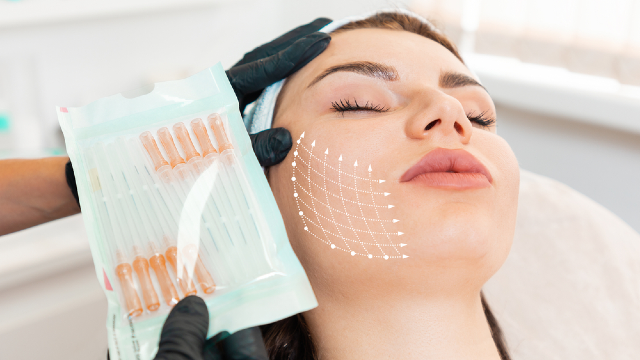
Dr. SuHyun Kim's Documented Role in Thread-Lifting Education
Medically reviewed by Dr. SuHyun Kim, Medical Director, Aube Clinic
When you research a clinic for a non-surgical facial lifting procedure, you often encounter a mix of titles, roles, and phrases attached to the treating physician. Some describe formal medical credentials. Others describe teaching activity, authorship, or membership in a professional society. And some are marketing language chosen to summarize a clinic's positioning. Understanding which is which helps you read a provider's background accurately and set realistic expectations before you ever book a consultation.
This article looks specifically at the documented roles that Dr. SuHyun Kim, Medical Director of Aube Clinic in Seoul, holds in relation to thread-lifting education. The goal here is educational: to describe those roles plainly, to explain what each one signifies, and — just as importantly — to explain what each one does not signify. None of the roles discussed below should be read as a medical board certification, a government or regulatory approval, or a guarantee of any particular outcome. They are designations, authorship, and professional-society involvement, and they belong in a different category than the credentials many patients are used to checking.
Why the Distinction Between Roles and Certifications Matters
Patients frequently, and understandably, treat every impressive-sounding title as if it carries the same weight. In practice, the medical and professional world uses several very different kinds of recognition, and conflating them can lead to misplaced confidence or confusion.
A medical board certification is a specific, formal credential. In the United States, for example, the American Board of Medical Specialties describes board certification as a voluntary process that goes beyond a basic medical license, requiring additional training, assessment, and ongoing maintenance within a defined specialty. It is verified through a recognized certifying body. A book authorship, a society presidency, or a company designation is a different thing entirely — none of them is a substitute for, or equivalent to, board certification.
At Aube Clinic, Dr. Kim is presented as the clinic's Medical Director and an aesthetic-medicine physician focused on non-surgical facial lifting. The clinic does not present him, and this article does not present him, as a board-certified dermatologist or plastic surgeon. What the clinic does document are several roles connected to thread-lifting education, and those are the focus here. If you want to confirm any physician's licensing or certification status directly, the clinic's team can be reached through the Aube Clinic contact page.
The Documented Roles in Thread-Lifting Education
Three specific items appear in Aube Clinic's documentation regarding Dr. Kim's involvement in thread-lifting education. Each is described below as what it is: a role, a piece of authorship, or a phrase.
Sole Author of "Standard Guide to Thread Lifting"
Dr. Kim is documented as the sole author of a book titled "Standard Guide to Thread Lifting." Authorship of a professional or educational text is a form of contribution to a field. Writing a guide requires organizing knowledge about techniques, materials, planning, and practical considerations into a structured reference that others can read.
What authorship signifies is engagement with the subject matter and a willingness to put a body of practice into writing. What it does not signify is a peer-reviewed clinical endorsement, a regulatory sign-off, or a certification of skill. A book is not vetted the way a medical license or specialty board is. It is helpful to understand authorship as evidence of focus and communication within a niche — thread lifting — rather than as a credential that measures clinical competence against a national standard. Reading a physician's writing, where available, can still give you a sense of how they think about a procedure, which is genuinely useful when you are choosing a provider. It is also worth remembering how authorship differs from certification in terms of who does the checking. A specialty board or licensing authority independently examines a physician against a defined standard and then issues a credential; with a book, the author themselves decides what to include, and any review that occurs is editorial rather than a formal assessment of clinical competence. That does not make authorship unimportant — organizing a technique clearly enough to teach it is a real form of professional engagement — but it means the value sits in the thinking on display rather than in any external verification. Read that way, a guide is best treated as a window into how a physician approaches a procedure, which you can then weigh alongside the credentials that an outside body has actually verified.
President of the International Thread Lifting Research Association
Dr. Kim is documented as President of the International Thread Lifting Research Association. This is a professional-society leadership role. Professional societies are voluntary membership organizations that bring together practitioners with a shared clinical interest — in this case, thread lifting — to share techniques, host discussions, and support continuing education.
Holding a leadership position such as president reflects involvement and standing within that particular community of interest. It is meaningful in the sense that peers within the society have recognized the individual's engagement. However, a society role is not a medical board certification, is not a government or academic credential, and is not a regulatory approval. Societies set their own membership criteria, and those criteria vary widely from one organization to another. When you see a society title, it is reasonable to view it as a marker of active participation in a field, while remembering that it operates in a separate category from the licensing and certification systems that formally assess and verify clinical qualifications.
The "Recognized Global Lifting Training Center" Phrase
Aube Clinic also uses the marketing phrase "recognized global lifting training center" to describe itself. It is important to read this exactly as what it is: a phrase the clinic uses in its own marketing to summarize its positioning around thread-lifting education and training activity.
A marketing phrase is not an accreditation issued by an independent regulatory body, and it should not be read as one. There is no implication here of a formal international curriculum with a fixed number of trained physicians or participating countries — Aube Clinic is a single-physician clinic, and this article does not assert any such program exists. Treating the phrase as descriptive marketing rather than as a certified credential keeps your expectations grounded. If you would like to understand precisely what the clinic means by this phrase, the most reliable approach is to ask directly, which you can do through the Aube Clinic about-us page and its contact channels.
What These Roles Are — and What They Are Not
To summarize the framing above in one place:
- What they are: documented authorship of a thread-lifting guide, a leadership role in a thread-lifting professional society, and a clinic marketing phrase. Together they describe a physician whose stated focus is thread lifting and who is active in that niche's educational and professional community.
- What they are not: they are not medical board certifications, not medical licenses, not government or regulatory approvals (such as FDA or MFDS clearance), and not guarantees of skill, safety, or any specific cosmetic result.
This distinction is not a criticism. Authorship and society involvement are legitimate forms of professional engagement. The point is simply that they answer a different question than "Is this physician certified by a recognized medical board?" — and patients deserve to keep those questions separate so they can make an informed decision.
A Brief Word on Thread Lifting Itself
Because these roles all relate to thread lifting, it helps to understand the procedure they concern. Thread lifting is a minimally invasive technique in which absorbable sutures — often barbed or coned — are placed under the skin to reposition or support soft tissue and to prompt a localized tissue response. Published reviews describe it as an option for mild to moderate sagging rather than a replacement for surgery.
A thread lift is not a surgical facelift. The results are generally more subtle, develop gradually, and are temporary, because the threads are designed to be absorbed over time. Individual outcomes vary considerably depending on anatomy, skin quality, the materials used, and technique. Like any procedure that places material under the skin, thread lifting carries realistic risks, which the medical literature notes can include swelling, bruising, dimpling, asymmetry, thread visibility or extrusion, and, less commonly, infection. A qualified provider should discuss these possibilities with you during a consultation. Understanding this context makes it easier to see why a physician's documented focus and educational activity, while informative, are only one part of the picture.
How to Evaluate a Provider's Background Sensibly
Titles and roles are useful inputs, not final answers. When you are weighing any aesthetic-medicine provider, a few habits help you interpret their background accurately:
- Separate categories of recognition. Ask yourself whether a given title is a license, a board certification, a society role, an authorship, a manufacturer designation, or a marketing phrase. Each carries different weight.
- Verify what can be verified. Licensing and formal certification can typically be confirmed through official registries. If a status is not documented or you cannot confirm it, treat it as unconfirmed and ask the clinic directly.
- Prioritize the consultation. A careful, unhurried consultation — where the provider assesses your anatomy, explains options, and sets realistic expectations — often tells you more about fit than any single title.
- Insist on realistic expectations. A trustworthy discussion includes limitations, risks, longevity, and the fact that a thread lift is not a facelift. Be cautious of any promise of guaranteed results.
- Ask questions freely. Reputable clinicians welcome questions about their background and about whether a recommended procedure is the right option for you, including alternatives.
Applied to Dr. Kim, this framework means reading his documented authorship and society presidency as evidence of focus and engagement in thread lifting, while keeping his licensing and certification status as a separate item you are entitled to confirm with the clinic directly.
Frequently Asked Questions
Is Dr. SuHyun Kim board-certified?
This article does not make a board-certification claim on Dr. Kim's behalf. He is documented as Medical Director of Aube Clinic and an aesthetic-medicine physician focused on non-surgical facial lifting. If board or licensing status is important to your decision, ask the clinic to confirm it directly in writing.
Does authoring a thread-lifting guide certify a physician's skill?
No. Authorship of a book reflects engagement with and communication about a subject, not a certification of clinical skill. A book is not vetted the way a medical license or specialty board certification is, so it belongs in a different category from formal credentials.
What is the International Thread Lifting Research Association role?
It is a professional-society leadership position. Dr. Kim is documented as its President, which reflects active involvement in that community of practitioners. A society role is not a medical board certification, a government credential, or a regulatory approval, and each society sets its own criteria.
What does "recognized global lifting training center" mean?
It is a marketing phrase Aube Clinic uses to describe its positioning around thread-lifting education. It is not an accreditation from an independent regulatory body, and it does not imply a formal international program with defined physician or country numbers. Ask the clinic directly for specifics.
Is a thread lift the same as a facelift?
No. A thread lift is a minimally invasive, non-surgical procedure using absorbable sutures. Its effects are generally more subtle, gradual, and temporary than surgery, and results vary from person to person. It is best understood as an option for mild to moderate sagging.
How can I check a physician's credentials?
Formal licensing and board certification can usually be verified through official registries, and organizations such as the American Board of Medical Specialties explain what certification involves. For any specific physician, the most direct route is to ask the clinic to document the status you are asking about.
The Bottom Line
- Dr. SuHyun Kim's documented thread-lifting roles are authorship of "Standard Guide to Thread Lifting" and the presidency of the International Thread Lifting Research Association, alongside the clinic's marketing phrase "recognized global lifting training center."
- These are designations, authorship, and a professional-society role — not medical board certifications, licenses, regulatory approvals, or guarantees of outcome.
- A thread lift is a non-surgical procedure with subtle, gradual, and temporary results, and it is not equivalent to a surgical facelift.
- When evaluating any provider, separate the categories of recognition, verify what can be verified, and prioritize a thorough consultation over titles alone.
- For anything not documented publicly — including licensing details — confirm directly with Aube Clinic before making a decision.
This article is for general educational purposes only and describes non-surgical aesthetic medicine in general terms. It is not medical advice, not a diagnosis, and not a self-diagnosis tool. Results vary from person to person, and no outcome is guaranteed. Always consult a qualified, licensed medical professional about your individual circumstances before making any treatment decision.
Clinical Safety Notice & Personalized 1:1 Consultation
All aesthetic and regenerative procedures at Aube Clinic (Hoban Summit Edition 2F, 66 Hangang-daero, Yongsan-gu, Seoul) are planned and performed 1:1 by Representative Director Dr. Suhyun Kim after direct facial anatomy and skin evaluation. Treatment outcomes and recovery timelines vary by individual tissue condition, and temporary swelling, bruising, redness, tenderness, or asymmetry may occur.
1:1 Consultation