
1:1 Consultation
Dermal Fillers vs Thread Lifting: Volumize or Lift?
Dermal fillers vs thread lifting compared: fillers restore lost volume while threads lift sagging tissue. Different goals, real risks, and no guarantees.
Aube Clinic · Dr. Suhyun Kim, M.D. · Yongsan-gu, Seoul
1:1 Consultation →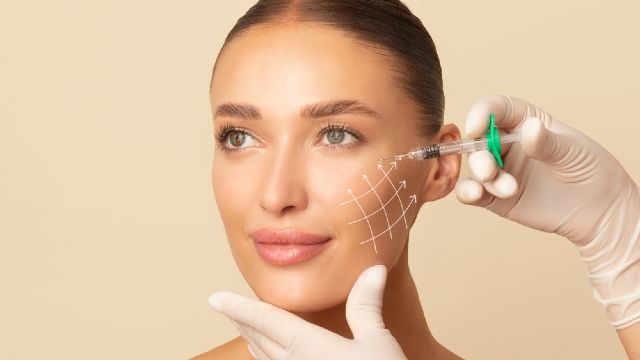
Medically reviewed by Dr. SuHyun Kim, Medical Director, Aube Clinic
Dermal fillers and thread lifting are two of the most common non-surgical treatments people consider when they want a refreshed look without surgery. They are often discussed as if they were competitors — as if you must pick one to "fix" facial aging. In reality, they are built for different jobs. Fillers are primarily about volume: replacing or adding fullness where tissue has thinned or deflated. Thread lifting is primarily about structural repositioning: gently supporting and lifting soft tissue that has begun to sag. Understanding that distinction is the single most useful thing you can take into a consultation.
This guide compares the two on what actually matters — what each does, how each works, how long results tend to last, the risks each carries, and when they might be used together. The aim is to help you ask better questions, not to declare a winner, because the right choice depends on your specific concern and anatomy, and sometimes the answer is a combination rather than either alone.
The Bottom Line
- Fillers volumize; threads lift. Dermal fillers replace or add volume to areas that have lost fullness, while thread lifting mechanically repositions and supports mildly sagging tissue. They address different concerns and are not interchangeable.
- Regulatory status varies by product and market. In the United States, specific hyaluronic acid (HA) fillers are FDA-approved for specific facial areas; use elsewhere on the face may be off-label. Aube Clinic's Ellansé (a polycaprolactone/PCL filler) and Megafill are non-US-FDA products, and thread systems are likewise market-specific.
- Fillers carry a rare but serious vascular risk. Accidental injection into a blood vessel can block blood supply and, though uncommon, can lead to skin necrosis or, very rarely, vision problems — one reason injector skill and anatomy knowledge matter.
- A thread lift is not a facelift. Threads provide a subtle, temporary lift suited to mild-to-moderate laxity; they cannot replicate surgery, and their effect fades as the threads absorb.
- Results vary and are not guaranteed. Both treatments are individual, both are temporary, and candidacy is decided in an in-person assessment — not from a web page.
What dermal fillers do
A dermal filler is an injectable gel placed beneath the skin to restore or add volume. According to the FDA, soft-tissue fillers are used to smooth wrinkles and folds and to add fullness to areas such as the cheeks and lips. The most familiar category is hyaluronic acid (HA) fillers, which are gel-like and, importantly, can often be dissolved with an enzyme (hyaluronidase) if needed. Other fillers work differently: some, like polycaprolactone (PCL) products, act partly as biostimulators that prompt the body's own collagen over time and are not reversible with hyaluronidase.
The key idea is that fillers address volume loss and contour, not sagging caused by descended tissue. If a cheek has flattened or a fold has deepened because the area has lost support and fullness, adding volume in the right place can soften it. What a filler does not do is take sagging tissue and reposition it upward the way a lift does; that is a different mechanical task.
Regulatory note (important): In the United States, individual HA fillers carry FDA approval for specific areas and specific uses — a product approved for the cheeks, for example, is not automatically approved for every other site, and using it elsewhere is considered off-label. Aube Clinic's fillers include Ellansé, a PCL (polycaprolactone) collagen-stimulating filler, and Megafill; these are not US-FDA products, and the clinic operates under Korea's regulatory framework, which differs from the FDA. If US regulatory status matters to you, ask specifically which product is being used and what it is approved for.
The vascular-occlusion risk you should understand
The most serious risk of any filler is vascular occlusion — accidental injection of filler into or against a blood vessel, which can block blood flow. The FDA highlights this as the most concerning filler risk: though the chance is low, the resulting complications can be serious and sometimes permanent, including tissue death (necrosis) and, rarely, vision changes including blindness. The published literature identifies higher-risk zones such as the nose, glabella (between the brows), and nasolabial folds, and describes warning signs like disproportionate pain and skin blanching. This is precisely why who injects you — and their knowledge of facial anatomy — matters so much, and why fillers should be treated as a medical procedure, not a casual add-on.
What thread lifting does
A thread lift uses fine, absorbable sutures inserted under the skin to gently reposition and support sagging soft tissue. The threads carry small cones or cogs that grip tissue and hold it in a slightly lifted position, producing an immediate mechanical lift. Over the following weeks and months, as the thread material is gradually absorbed, it also stimulates a collagen-forming response along the thread's path. The American Society of Plastic Surgeons describes thread lifting as a minimally invasive way to produce a subtle lift, best suited to mild-to-moderate laxity rather than significant sagging.
Two limits must be stated clearly. First, a thread lift is not a facelift. It offers a lesser, temporary lift — generally lifting tissue by a few millimeters — and cannot replicate the result of surgery, which physically repositions and removes tissue. People with significant sagging are usually better served by other options, and a careful provider will say so. Second, thread lifting carries real risks, including swelling, bruising, dimpling, thread palpability or extrusion, asymmetry, and infection. Because the threads absorb over time, the lift gradually relaxes, which is why results are described as temporary and why maintenance is part of a longer-term plan for many people.
Volumize vs lift: how to tell which concern is yours
The clearest way to choose is to name the problem you are actually trying to solve.
- If the concern is lost fullness or contour — flatter cheeks, thinning lips, a deepened fold caused by volume loss — that is a volume problem, and a filler is the tool designed for it.
- If the concern is descent or sagging — a softening jawline, drooping mid-face tissue, or laxity that makes the face look "pulled down" — that is a structural problem, and thread lifting is the tool designed to reposition and support it.
- If the concern is significant sagging or loose skin, neither may be the right answer; an in-person assessment may point toward surgical options and set realistic expectations, because a thread lift cannot do a facelift's job.
In practice, aging is rarely one problem in isolation. Many faces show both some volume loss and some laxity at the same time, which is exactly why these treatments are often discussed as complementary rather than competing. But complementary is a clinical decision, not a default — it should follow an honest assessment of what your face actually needs.
When they are used together
Because fillers and threads solve different problems, there are situations where a plan combines both: threads to reposition sagging tissue, and a filler to restore fullness where volume has been lost, each doing the job it is designed for. When appropriate, this can produce a more balanced result than either alone. At Aube Clinic, whether a combined approach is suitable is determined during an individualized, anatomy-based consultation with Dr. SuHyun Kim rather than a one-size-fits-all protocol. You can read more about the clinic's single-doctor, one-patient-per-visit model on our about us page.
Combination, however, does not mean "more is better." Layering treatments adds cost, recovery, and cumulative risk, and it should only be recommended when there is a clear reason. A good consultation is as willing to advise against a treatment as to recommend one.
What to expect during and after treatment
Both fillers and thread lifts are in-office procedures. Filler injections take only minutes per area, often with a topical numbing agent or lidocaine mixed into the product for comfort; you typically see results immediately, with some swelling or bruising that settles over days. Thread lifting is usually performed under local anesthesia, with the threads introduced through small entry points and the tissue gently repositioned; the immediate lift is visible on the table, and the collagen-driven refinement follows over subsequent weeks.
Recovery for both is generally short but not nothing. Swelling, bruising, tenderness, and mild tightness in the first days are common. After threads, most people are advised to avoid strenuous activity, wide mouth movements, facial massage, and dental work for a period, and to sleep face-up while healing — instructions that reduce the chance of migration, dimpling, or asymmetry during the vulnerable early phase. After fillers, you should know the warning signs of a vascular problem (unusual pain, blanching, or skin-color changes) and how to reach your provider urgently if they occur. Your clinician should give you specific, written aftercare guidance tailored to the treatment used.
It also helps to keep expectations grounded. Fillers gradually break down and threads gradually absorb, so both effects are temporary and neither halts aging. The realistic goal is a window of improvement and a natural refinement, not a permanent or dramatic transformation. Candidacy screening matters too: active skin infection, certain medical conditions, pregnancy, unrealistic expectations, or a history of specific reactions may make one or both treatments unsuitable, and a responsible provider will decline or redirect when they are not the right call. This article does not discuss pricing; costs and suitability are individual and should be confirmed directly with the clinic through our contact us page.
Frequently Asked Questions
What is the main difference between fillers and thread lifting?
Fillers restore or add volume to areas that have lost fullness, while thread lifting mechanically repositions and supports mildly sagging tissue. In short, fillers volumize and threads lift. They address different concerns, so the right choice depends on whether your issue is lost volume, descended tissue, or both.
Which one is better for sagging skin?
Thread lifting is the treatment designed to reposition and support mildly sagging tissue, whereas fillers address volume rather than descent. That said, a thread lift is not a facelift and suits only mild-to-moderate laxity; significant sagging often calls for other options. An in-person assessment is the only reliable way to tell what your skin needs.
Are dermal fillers FDA-approved?
In the United States, specific hyaluronic acid fillers are FDA-approved for specific facial areas, and using a filler outside its approved area is considered off-label. Aube Clinic's Ellansé (a polycaprolactone filler) and Megafill are not US-FDA products, and the clinic operates under Korea's regulatory framework. Ask which product is being used and what it is approved for.
What is vascular occlusion and how serious is it?
Vascular occlusion is when filler is accidentally injected into or against a blood vessel, blocking blood flow. The FDA describes it as the most concerning filler risk: although uncommon, it can cause serious and sometimes permanent complications such as tissue death and, rarely, vision problems. This is why injector skill, anatomy knowledge, and prompt recognition of warning signs are so important.
Is a thread lift the same as a facelift?
No. A thread lift is a minimally invasive procedure that provides a subtle, temporary lift of only a few millimeters and is suited to mild-to-moderate laxity. A surgical facelift physically repositions and removes tissue and is a different category of procedure. Threads cannot replicate a surgical result, and their effect fades as the threads absorb.
Can fillers and threads be combined?
Yes, in some plans they are used together — threads to reposition sagging tissue and filler to restore lost volume — because they solve different problems. Whether a combined approach is appropriate is a clinical decision made during an in-person consultation, not a default. Combining treatments also adds cost, recovery, and cumulative risk, so it should have a clear reason.
How long do the results last?
Both treatments are temporary and results vary between individuals. Fillers gradually break down over months, with duration depending on the product and area, and thread-lift results relax as the threads absorb over time. Neither halts aging, so maintenance or repeat treatment is part of a longer-term plan, and no specific duration can be guaranteed.
Disclaimer
This article is for general educational purposes about non-surgical aesthetic medicine and is not medical advice, a diagnosis, or a treatment recommendation. It is not a self-diagnosis tool. Dermal fillers and thread lifting carry risks — including, for fillers, a rare but serious risk of vascular occlusion — and their results are gradual, variable, and temporary rather than guaranteed. A thread lift is not a facelift. Individual candidacy and outcomes differ, so please consult a qualified physician in person to determine whether any treatment is appropriate for you.
Clinical Safety Notice & Personalized 1:1 Consultation
All aesthetic and regenerative procedures at Aube Clinic (Hoban Summit Edition 2F, 66 Hangang-daero, Yongsan-gu, Seoul) are planned and performed 1:1 by Representative Director Dr. Suhyun Kim after direct facial anatomy and skin evaluation. Treatment outcomes and recovery timelines vary by individual tissue condition, and temporary swelling, bruising, redness, tenderness, or asymmetry may occur.
1:1 Consultation