
1:1 Consultation
Aptos Thread Lift in Korea: HA-Infused NAMICA Threads
Aptos threads combine PLA, PCL and hyaluronic acid via NAMICA technology to add hydration alongside a non-surgical lift at Aube Clinic in Seoul. Read on.
Aube Clinic · Dr. Suhyun Kim, M.D. · Yongsan-gu, Seoul
1:1 Consultation →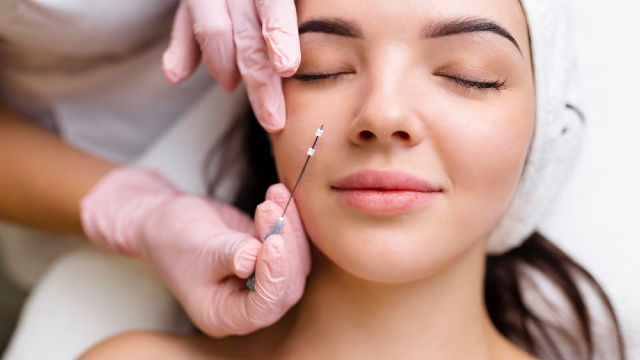
Medically reviewed by Dr. SuHyun Kim, Medical Director, Aube Clinic
Aptos is a family of absorbable threads used for non-surgical facial lifting, and it is one of several thread systems offered at Aube Clinic in Seoul. What sets some Aptos threads apart in the way they are marketed is a technology described as NAMICA, in which the thread material is combined with hyaluronic acid so that the treatment aims to add hydration and skin-quality benefits alongside a mechanical lift.
This guide explains, in plain language, what HA-infused Aptos threads are, how the NAMICA concept is meant to work, and what a thread lift can realistically offer compared with surgery. Thread lifting is a temporary, minimally invasive procedure. Results vary from person to person, and no clinic can promise a specific outcome. The goal of this article is to help you understand the modality clearly before you decide whether to explore it in a personal consultation.
What Aptos Threads Are
Aptos threads are absorbable sutures placed under the skin to reposition mild to moderate sagging and to stimulate the body's own collagen response. They belong to the broader category of thread lifting, which the American Society of Plastic Surgeons describes as a procedure that uses temporary sutures to produce a subtle lift and to encourage collagen production, offering less downtime than a surgical facelift.
Aptos threads are commonly made from absorbable polymers such as polylactic acid (PLA) and polycaprolactone (PCL). Some Aptos products additionally incorporate hyaluronic acid. Because these materials are absorbable, the lift is temporary by nature: the thread breaks down gradually over months, and the mechanical component of the result fades as it does.
A point on regulation is important. Aptos threads are used in Korea and in CE-mark regions, and Aube Clinic does not claim a specific U.S. FDA clearance for these products. Thread devices in the United States are generally regulated as absorbable surgical sutures, and any regulatory status for a specific named product should be confirmed directly with the clinic. This article discusses Aptos at the level of the modality rather than asserting a particular approval.
Understanding NAMICA and the Role of Hyaluronic Acid
NAMICA is the name given to a technology that infuses hyaluronic acid into the thread. To understand why that is of interest, it helps to know what hyaluronic acid does in skin. Hyaluronic acid is a naturally occurring molecule found throughout the body's connective tissue. According to StatPearls, it is highly water-attracting, which allows it to draw in and hold moisture and to contribute to volume and structural support. Levels of hyaluronic acid and collagen in the skin decline with age, which is one factor in the loss of firmness and the appearance of fine lines over time.
The idea behind an HA-infused thread is to pair two functions in a single treatment. The thread itself provides the structural side of the procedure, gently repositioning tissue and stimulating collagen as it absorbs. The hyaluronic acid component is intended to add a hydration and skin-quality dimension in the treated area. In marketing terms this is often framed as a "lift plus skin conditioning" approach, and that framing is reasonable to describe as long as it is not overstated.
It is worth being measured here. Hyaluronic acid delivered in this way is not the same as a hyaluronic acid dermal filler, which is injected in larger volumes to replace lost volume. The amount and behavior of HA on a thread are different, and any skin-quality benefit should be understood as a supportive feature rather than the main event. The primary purpose of the procedure remains a subtle, temporary lift, and expectations should be set accordingly.
How the Lift Works Mechanically
Aptos threads typically feature a structure along their length, such as bidirectional cogs or barbs, that grips surrounding soft tissue. When a thread is inserted along a planned vector using a fine cannula or needle and then gently tensioned, that structure engages the tissue so it can be gathered and repositioned toward a higher point. Because the gripping structure is often bidirectional, tension is distributed along the thread rather than concentrated at a single anchor, which is intended to produce a smoother redraping of the treated area.
As with all absorbable thread systems, two things happen together:
- An immediate mechanical lift, produced by the thread physically holding tissue in a slightly elevated position. Initial swelling can temporarily mask or exaggerate this in the first days.
- Gradual collagen stimulation, as the absorbable material breaks down and prompts a controlled healing response around the thread. This biological remodeling develops over weeks and is thought to contribute to firmness that can persist for a time after the thread itself is gone.
The HA-infused design layers a hydration component onto this same process. None of these mechanisms, individually or together, reproduces the result of a surgical facelift, which is a fundamentally different procedure.
Why an Aptos Thread Lift Is Not a Facelift
A thread lift and a surgical facelift should not be equated. A facelift is a surgical operation involving incisions and the repositioning or removal of deeper tissue and skin, with a correspondingly longer recovery. A thread lift places absorbable sutures under the skin to achieve a subtle repositioning and to stimulate collagen, and it removes no tissue.
Because Aptos threads are absorbable, the lift they provide is temporary and modest. This makes thread lifting well suited to early or moderate sagging and skin-quality concerns, but it is not a replacement for surgery in patients with heavy, advanced laxity. Someone with significant sagging may be disappointed if they expect a thread lift to deliver a surgical degree of change. Aube Clinic does not describe thread lifting as a "non-surgical facelift," because that phrase sets an expectation the modality is not designed to meet. A candid consultation is where the right approach for an individual is identified.
The Procedure and Aftercare at Aube Clinic
At Aube Clinic, thread lifting is performed by the clinic's physician, and the clinic works on a one-patient-per-slot basis so each plan is designed around the individual rather than applied from a fixed template. A typical pathway includes:
- Assessment and planning. The areas of concern are evaluated and the lifting vectors are mapped to the person's facial anatomy. Thread type, count, and placement are selected individually, which is where a system such as Aptos may or may not be chosen for a given case.
- Preparation and comfort. The area is cleansed, and a local anesthetic is generally used. Specific anesthesia details can be discussed at consultation.
- Thread placement. The HA-infused Aptos threads are introduced along the planned paths and gently tensioned so the gripping structure engages the tissue.
- Review. Symmetry and contour are checked before the treatment is completed.
Afterward, temporary swelling, mild bruising, tenderness, or a tight sensation are common in the first days. Patients are often advised to avoid strenuous exercise, facial massage, wide mouth movements, and sleeping face-down for a period while tissue settles. Your physician's specific instructions always take precedence over general guidance.
You can read more about the clinic's single-physician, individualized model on the About Us page, and you can send your questions through the Contact Us page before deciding whether an in-person assessment makes sense for you.
Longevity and Realistic Expectations
Results from a thread lift appear partly immediately and partly over time. The mechanical lift may be visible early, while collagen-related firmness develops gradually. Because the threads are absorbable, the lift is not permanent, and how long it lasts depends on many factors: the individual, skin thickness and elasticity, the area treated, lifestyle factors such as sun exposure and smoking, and the natural course of aging.
Published clinical experience with absorbable thread lifting generally points to it being best suited to modest sagging and skin-quality goals rather than dramatic structural change, and it recognizes that the visible lifting effect diminishes over time. Recognized complications, including swelling, bruising, dimpling, asymmetry, and thread extrusion, are documented in the medical literature, which is why physician experience and careful patient selection matter. For all of these reasons, no responsible clinic guarantees a specific result or a fixed duration. Some patients choose to repeat or combine treatments over time to maintain their appearance, a decision best made together with a physician.
Who Might Be a Candidate
Aptos and similar thread treatments are generally considered for adults with mild to moderate laxity who want a subtle change, a shorter recovery than surgery, and, in the case of HA-infused threads, a hydration-oriented component. Patients with realistic expectations tend to be the most satisfied.
Thread lifting is not suitable for everyone. Active infection or certain skin conditions in the treatment area, bleeding disorders, some autoimmune conditions, and pregnancy are among the situations that call for caution or make the procedure inappropriate. This is not a complete list, and only an in-person medical evaluation, with full disclosure of your medical history, can determine candidacy. As a note on credentials, Dr. Kim is documented as an Aptos Key Doctor, which is a manufacturer-issued designation reflecting product-specific familiarity rather than a medical board certification.
Aptos Compared With Other Thread Systems
A frequent question is how Aptos compares with systems such as Silhouette Soft. The most useful comparison is by material and structure rather than by brand promotion. Aptos threads are often built from PLA and PCL and, in HA-infused versions, incorporate hyaluronic acid, with a cog or barb structure that grips tissue. Other systems use different materials or different anchoring designs, such as cone-based threads. Each distributes tension differently and suits slightly different concerns and tissue types.
There is no universally "best" thread. The right choice depends on the anatomy of the individual face, the areas being treated, skin quality, and the patient's goals. This is precisely why Aube Clinic matches thread selection to the person during consultation instead of defaulting to a single product for every patient.
The Bottom Line
- Aptos threads are absorbable sutures for non-surgical facial lifting; HA-infused versions use NAMICA technology to add a hydration component alongside the lift.
- The lift works through an immediate mechanical repositioning plus gradual collagen stimulation, while the hyaluronic acid aims to support skin quality in the treated area.
- A thread lift is not a facelift and does not replace surgery for advanced sagging; the result is temporary and varies between individuals.
- Aptos is used in Korea and CE-mark regions, and Aube Clinic makes no specific U.S. FDA claim for these products; no clinic can guarantee a result or a duration.
- Suitability, thread choice, and expected outcomes should be decided in an individual, physician-led consultation.
Frequently Asked Questions
What is NAMICA technology in Aptos threads?
NAMICA refers to an approach that infuses hyaluronic acid into the absorbable thread. The intention is to combine a mechanical lift and collagen stimulation from the thread with a hydration and skin-quality component from the hyaluronic acid. It is a supportive feature layered onto the lift, not a replacement for a hyaluronic acid filler.
How is an HA-infused thread different from a dermal filler?
A dermal filler is injected in larger volumes to replace lost volume, whereas an HA-infused thread is placed to reposition tissue and stimulate collagen, with hyaluronic acid as a smaller, supportive addition. The primary purpose of the thread is a subtle lift, so any hydration benefit should be understood as secondary.
Is an Aptos thread lift a non-surgical facelift?
No. Thread lifting is a minimally invasive procedure that repositions tissue with absorbable sutures and stimulates collagen; it does not remove skin as a surgical facelift does. It suits mild to moderate sagging and is not a substitute for surgery when laxity is significant.
How long do Aptos thread lift results last?
Because the threads are absorbable, the lift is temporary and fades as the material breaks down over months. Collagen-related firmness may persist for a time afterward, but duration varies with skin quality, the area treated, lifestyle, and aging. No specific timeframe can be guaranteed.
Is the Aptos procedure painful, and what is recovery like?
A local anesthetic is typically used for comfort during placement, so most patients tolerate the procedure well. Temporary swelling, mild bruising, tenderness, or a tight sensation are common in the first days, and clinicians often advise avoiding strenuous activity and facial massage for a period. Your physician will give instructions tailored to you.
Are Aptos threads FDA-approved in the United States?
Aptos threads are used in Korea and CE-mark regions, and Aube Clinic does not claim a specific U.S. FDA clearance for these products. In the United States, thread devices are generally regulated as absorbable surgical sutures. Any regulatory question about a specific product should be confirmed directly with the clinic.
How do I know if an Aptos thread lift is right for me?
Suitability depends on your degree of sagging, skin quality, medical history, and goals, and it can only be determined in an in-person assessment. During consultation, thread type is matched to your anatomy rather than chosen from a fixed protocol, and the physician will explain what is and is not realistic for your situation.
This article is for general educational purposes about non-surgical aesthetic medicine and is not medical advice, a diagnosis, or a treatment recommendation. It is not a self-diagnosis tool. Thread lifting is a minimally invasive, temporary procedure, and results vary between individuals. Candidacy, technique, and expected outcomes can only be determined through an in-person consultation with a qualified physician. Always follow the specific guidance of your treating clinician.
Clinical Safety Notice & Personalized 1:1 Consultation
All aesthetic and regenerative procedures at Aube Clinic (Hoban Summit Edition 2F, 66 Hangang-daero, Yongsan-gu, Seoul) are planned and performed 1:1 by Representative Director Dr. Suhyun Kim after direct facial anatomy and skin evaluation. Treatment outcomes and recovery timelines vary by individual tissue condition, and temporary swelling, bruising, redness, tenderness, or asymmetry may occur.
1:1 Consultation